my photosBARRINGTON COURTBarrington Court, an attractive 16th century house, came into the possession of the National Trust in 1907. Set in Somerset countryside, this property is well worthy of a visit.
 Take a stroll along basket weave paving, with fragrant lavender edging.
 Walk past electric blue salvia, which makes a statement. One of many herbacious borders being influenced by Gertrude Jekyll.
o
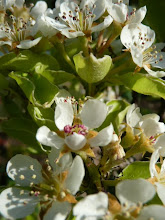
Discover a spectacular White Garden, just one of a series of walled gardens.
o
u
A lovely feature, the 17th century stable block, adorned with rambling roses.
o
o
Barrington Court is built in an E-shaped style of the period, in Ham Hill stone. This side of the house is faced with meadow, a great natural habitat for all insects, especially butterflies.
o
o
The practice of forcing rhubarb didn't start until the early 19th century when a Chelsea gardener made a chance discovery by leaving a chimney pot over one of his plants. He found that depriving rhubarb of light made the stems shoot upwards, searching for light, which made for a more succulent-tasting product.
o
o
Looking down from the Tudor manor house which was restored in the 1920s by the Lyle family (of Tate & Lyle fame). o
o
Espaliered fruit grows against high stone walls in the working kitchen garden with apple, pear and plum trees, as well as cherries.
o
A view from the kitchen garden. Sweetcorn is wind pollinated, and best planted in large blocks.
o
o
Another herbacious border, with swathes of planting.
o
o
Let's hope these bee hives are playing a part in helping to restore our dwindling bee population.
o
o