skip to main |
skip to sidebar
 my photosTHE SOUTH OF ENGLAND SHOWA show celebrating countryside, rural life and farming, is held annually at the South of England Showground at Ardingly.
  One favourite display of mine was From Plot to Plate, 'grow your own' harvested straight from the allotment, set amongst vintage kitchen and garden 'alia.
  For the first time since the Second World War, food seeds are outselling flower seeds. No longer just a hobby to keep occupied in retirement, an allotment plot is popular with all ages. With organic produce and thrift on the menu, once vacant sites are now full, with long waiting lists.
 Gromit measuring his marrow, with prize winning potential!
  When it comes to Pot Leeks, among the men of Geordieland, size is important! Competitions date to the late 19th century, when miners began organising shows in clubs and pubs, paying a little each week to fund prizes.Things have now become so serious that some exhibitors spend the night out with their vegetables to guard against intruders. It has been known for men to sleep with their leeks more often than they do with their wives! A recipe for a traditional North East Leek Pudding, a recipe dating back to the 18th century. u
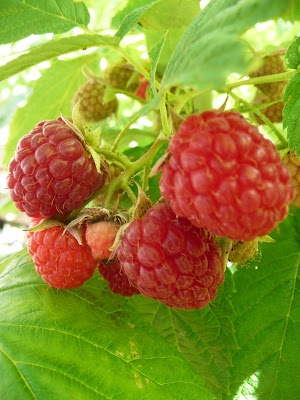 my photoRASPBERRIESSo far a great year for soft fruit. My raspberry canes which my Dad gave me a couple of years ago are producing a lot of fruits for me. I must confess not a lot are making it to the kitchen but today being an exception. I have bought a tub of cream and meringues and I am going to make an Eton mess! Crushed meringues and raspberries, mixed into whipped cream.According to Robin Weir in Recipes From The Dairy, Eton mess was served in the 1930s in the school's sock (tuck) shop, and was originally made with either strawberries or bananas mixed with ice cream or cream. Meringue was a later addition. Nowadays, Eton mess consists of pieces of crisp meringue, lightly whipped cream and strawberries, all stirred together - hence the name 'mess' - Heston Blumenthal
A raspberry is made up from a cluster of pips surrounded by fruit pulp, all held together by a central core, which forms the berry.

 my photos
AMERICAN LAND CRESS
Great to use in a salad, as an addition to a soup or as a garnish (see below for a recipe using Watercress I discovered on the internet – maybe substitute with Land Cress). Great in egg sandwiches too ...!
Much grown in England in the 17th century but fell from fashion and richly deserves a revival.
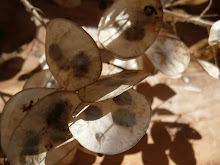
Today in my garden, I harvested seed from my pot of American Land Cress. I discovered this great substitute for Watercress when I bought a packet for a relative to try, and ended up with a pot grown plant from her to myself. In fact I had forgotten about it, as once it had gone to seed I buried it in a border to get the benefit from the pretty yellow flowers it had produced, only rediscovering it again when I was having a general tidy up. Gone were the flowers, being replaced by lovely dried seed heads, even after cutting these off I can still use the original plant as fresh growth has sprouted from the base which is still usable. At this time of year the leaves are extremely fiery but in different seasons it has a milder taste to it.
American Land Cress can be sown at just about any time of the year, maybe sow some soon for use over the winter, it can put up with the cold, but maybe cover with fleece in chillier regions.
A Recipe - Watercress Butter
What to use:
Unsalted butter – (4 oz) 125g, softened
Watercress leaves – (1 oz) 25g, finely chopped
Fresh lemon juice
1 tsp Ground black pepper
1/4 tsp Cayenne pepper
How to make:
In a food processor blend the butter, watercress leaves, lemon juice, black pepper and cayenne pepper until the mixture is very smooth. Let the mixture stand for about 30 minutes at room temperature or chill it, but bring it back to room temperature before using.