OOO
t

Showing posts with label interesting facts. Show all posts

27/08/2008


my photo

ACHILLEA PTARMICA (THE PEARL)

A favourite of Edwardian garden designer Gertrude Jekyll. Especially lovely in evening light.

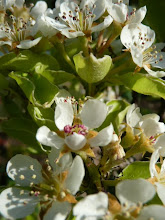
A main stem, with branching stems carrying white button-like flowers and small dark green toothed leaves. Tolerant of most soils and aspects, in my garden doing especially well in moist, sandy soil. This vigorous plant spreads by underground suckers and will quite happily romp through a large area, so be warned. After a long flowering season from June to October, the plant can be cut back to ground level.

A perennial with medicinal properties, good for cutting and using either fresh or dried, and is a great alternative to Gypsophila (baby's breath).

08/08/2008


my photos

BUDDLEIA

The Butterfly Bush, a very much maligned and misunderstood deciduous shrub. Why, because it effortlessly self seeds on development land and derelict sites, through cracks and bricks in buildings, and along our railway lines and sidings.

A thug to some perhaps, but contrary to belief the form of Buddleia I have in my garden is no problem at all, and its dark pink flowers on arching stems are a welcome edition to any garden in late summer.

Every year, an established bush will need a hard cut back to 3 or 4 buds in early Spring.


Named after the Reverend Adam Buddle (1660-1715), the nectar rich flower spikes are loved by butterflies and other insects.

Silhouettes of a Comma and Red Admiral butterfly, or two fairies, you decide?

22/07/2008


GOLDFINCH

These chatty little birds have been down to the birdbath again this morning, the slightest movement from her indoors and they are off again!

I first noticed these small, bright and colourful birds around the garden a couple of years back, I can't say I had ever noticed them before. I first became aware of their song, almost a twinkle and very distinctive, and seemingly using our television aerial as a prominent perch.

These birds migrate to southern Europe, but many now stay due to our milder climate. I suspect my resident birds have nested in a neighbour's hawthorn tree, on numerous occasions seeing them flit in and out.

Their long thin beaks are perfect for extracting seed; thistle, teasel, dandelion and burdock, and in the summer months will also pick off small insects.


The goldfinches are loving the thistle seed, and have it all to themselves. For many months the feeder hung in a less manicured part of my garden, untouched, but is now two-thirds empty and will need a top-up soon.

A group of goldfinches is known as a charm and they certainly don't fail to live up to their collective noun.

15/07/2008


my photo

REDCURRANTS

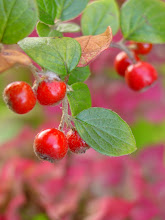
Currants, including red ones, have the highest content of fruit acid of all berries. They also are very high in vitamin C, vitamin E and fibre. They grow in grape-like clusters on sturdy perennial shrubs.

The two bushes have given a good crop this year, which is good, but I do find harvesting them a bit fiddly and time consuming, and always put off doing it until the point when I really do have to.

Now I have picked a couple of punnets full, I wonder what I can do with them?

(punnet) - a small, square basket used for holding soft-fruit.


28/06/2008


my photo

RASPBERRIES

So far a great year for soft fruit. My raspberry canes which my Dad gave me a couple of years ago are producing a lot of fruits for me. I must confess not a lot are making it to the kitchen but today being an exception. I have bought a tub of cream and meringues and I am going to make an Eton mess! Crushed meringues and raspberries, mixed into whipped cream.

According to Robin Weir in Recipes From The Dairy, Eton mess was served in the 1930s in the school's sock (tuck) shop, and was originally made with either strawberries or bananas mixed with ice cream or cream. Meringue was a later addition. Nowadays, Eton mess consists of pieces of crisp meringue, lightly whipped cream and strawberries, all stirred together - hence the name 'mess' - Heston Blumenthal

A raspberry is made up from a cluster of pips surrounded by fruit pulp, all held together by a central core, which forms the berry.

20/06/2008


my photo

THE LONGEST DAY

Here in the Northern hemisphere we usually mark the longest day on the 21st of June, but because this year is a leap year, the longest day is one day earlier, the 20th of June. From now on the days will get shorter, so less time to spend in the garden.

Apparently Midsummers day is on the 24th? Traditionally on this day St John's Wort was gathered, thought to be imbued with the power of the sun. Other special flowers (Vervain, trefoil, rue and roses) were also thought to be most potent at this time, and were traditionally placed under a pillow in the hope of important dreams, especially dreams about future lovers!

13/05/2008


my photos

HIGHDOWN GARDENS

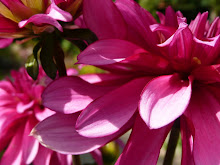
I would like to show you the photos of plants growing on chalk downland soil, taken on my outing to Highdown Gardens in Worthing, which is open to the general public free of charge (although donations are very welcome). Above the most blousy tree peony I have ever seen.



Highdown Gardens is one of the least known about gardens in the area, but it is one that offers a unique collection of rare plants and trees. The views from the gardens are beautiful and include the sea and the South Downs. Above is a very pretty herbaceous peony.


The garden looks its best in spring and early summer when there is a colourful succession. A lovely yellow peony this time.


The whole garden has been deemed a National collection. Above a vivid orange rhododendron.


A beautiful purple bearded iris. The garden was created during a period when many expeditions were going out to China and the Himalayan regions collecting rare and beautiful plants.


Volunteers meet once a month on a Friday morning to assist with a variety of light conservation work within the gardens. They are always on the lookout for new helpers. The pink cherry blossom above was hanging in clumps from the branches.


The beautiful handkerchief tree (also known as the dove or ghost tree) with white bracts which hang down and flutter in the breeze. Discovered growing in China in the 1860s by the French explorer Pere Armand David. This tree first flowered in England in 1906.

This is the most amazing tree and I would very much like it in my garden.

28/04/2008


my photo

KERRIA

This double-flowered variety of Kerria (Japonica Pleniflora) is also known as Bachelor's Buttons, Jew's Mallow and Japanese Rose. A really pretty shrub to have around the garden at this time of year. I really like the combination of the 'custard powder' yellow of the blooms against the lime green of the leaves.

It will grow just about anywhere and if left to its own devices can reach up to 6ft tall. It will also spread by suckers which grow from its creeping underground root system. A plant which is best kept in check by pruning out all the old flowering stems.

William Kerr a protégé of Sir Joseph Banks, the famous 18th-century naturalist and plant collector, bought this particular variety back from China in 1804. By 1838 it was so common it was to be found in the gardens of labourers cottages!

This post is for my blogpal Daffy from Approaching 40, she has a delightful specimen in her garden too!

28/03/2008


my photo

BERBERIS DARWINII

Also known as Barberry, this evergreen shrub was discovered in South America by Charles Darwin in 1835. If you want colour in your garden at this time of year, this is the shrub to have. It bears masses of small clusters of the brightest orange of flowers, and very often has a second flush in the Autumn.

Mine stands alone, but used as a full hedge its thorniness is a great deterrent, adding security to the garden. It requires careful pruning, as it has spiny holly-like leaves which will tear your hands to shreds if you are not wearing thick leather gardening gloves. This is one occasion when I do wear gloves, people who know me know that I would rather get dirt up my fingernails, although saying that, those latex disposable gloves come in handy for various tasks around the garden!

A great use for the prunings, is to lay them over your freshly dug over beds to keep the neighbours' cats off, don't get me wrong, I love cats, but my garden is not to be used as a WC for all and sundry!

20/03/2008


my photos

HAPPY EASTER

Have the happiest of Easters
And the springiest of Springs!


Violet is for faithfulness
Which in me shall abide
Hoping likewise that from your heart
You will not let it hide

The sweet scented and the dog violet are both classed as herbs, so can be used in a salad. Another use is in cordials, preserves and tea, and don't forget crystallised on the top of cakes and chocolates.

Violets can also used for medicinal purposes in the form of poultices to relieve ulcers, a tincture for sore throats, to ease the symptoms of catarrh and to lessen rheumatic pain.

The violet, such a tiny delicate flower with so many uses.

Watchfulness, faithfulness, I'll always be true

17/03/2008


my photo

WHITE VIOLETS - Let's take a chance

Since medieval times the violet has represented the month of March in the flower calendar because this was the normal month of its emergence.

I have discovered C W Groves & Son, a nursery in Bridport in Dorset, which specialises in various species of violet. Another place to visit, when we are next down that part of the country.

Another violet post coming soon.

Elaine from Feel My Felt asked if these violets are growing out of paving, and noticed the two other plants in the photo. Yes they are coming through a crack in the paving, they have self-seeded here. The two other plants in the photo, are sedum which will grow just about anywhere, and herb robert, which is a member of the geranium family, practically a weed in my garden. I am forever pulling it up, the whole plant has a very pungent smell!

14/03/2008


my photo

AUBRIETA

Sheila from Greenridge Chronicles wants to know what the little mauve plant is, which crept into my shot of the celandine, well it is Aubrieta. Even though I loathe to call any garden plant common, this little rock plant is readily available in our garden centres, although sometimes difficult to find in any colour other than this shade of mauve. My neighbour has it in cerise, which is gorgeous.

These plants thrive in both fairly rich soil and to be quite honest fairly dry soil, I have them planted in both, and they both seem to do equally as well.

They are named after M Aubriet who was a French botanical artist.

10/03/2008


my photos

SCILLA

Along with Spring comes blue, and I would say the colour blue in flowers is probably my favourite. Along with green, blue is the most agreeable of colours in the garden. It is always fascinating to watch these little scilla poking their heads through the soil all at different intervals, first the strappy leaves, and then the tiny blue heads appear, in my eyes a truly remarkable little bulb, which every years seems so full of energy. Of course these can be planted straight into the soil, but I keep mine in little pots, storing them away in the shed, with their pot, after flowering, and then introducing them back outside in time to flower again late winter, early spring.


Scillas were regarded by William Robinson as indispensable garden flowers. They bloomed in winter and on into the spring.

01/03/2008


my photo

SNOWDROPS - Hope

Do you step out into your garden, full of good intentions of getting lots done, but instead spend more time taking photos than you do getting your hands dirty? Well since starting my garden blog, this is definitely the case for me. It suddenly came to me, as today is the 1st of March, that my Jan/Feb poll would have closed. I asked everyone, which was their favourite spring bulb, well the little beauties above are the winner.

Yes, the snowdrop received 51% of the votes, daffodil came in second with 25%, third bluebell with 16%, and last and definitely not least, the crocus with 6%.

There are approximately 100 different species and cultivars of snowdrop, the two most common being galanthus nivalis which flowers from January to March, and galanthus nivalis floro pleno, a double variety which easily naturalises.

I only have two clumps of snowdrop in my garden, I lost one clump last year. This year I am going to divide the clumps into small sections, and replant. My longterm plan is to have drifts, may have to wait though! This is best done immediately after the plant has flowered and while 'in the green'. Snowdrop bulbs are fiddly and unreliable, so division is the way forward. To increase my stocks I may be lucky enough to get a few clumps off my Dad, he has lots coming up through the lawn, they look beautiful.

Do you know that snowdrop enthusiasts are known as galanthropiles!

16/02/2008


my photo

EUCALYPTUS

I must confess that I wasn't really prised to my garden bench for a whole month, I was on an unforgettable trip to Australia. The photo above was taken from a distance and you can just make out the little fellow sitting up high in the tree. We were very fortunate to have seen this lovely koala and more of his friends and family, in their wild habitat on Kangaroo Island, which lies south of Adelaide. A lifetime ambition has now been fulfilled.

Eucalyptus, or gum trees, are the most characteristic feature of the Australian flora. It grows to 115 metres (375 feet) and has a smooth blue-grey trunk, and long, narrow leathery leaves with a bluish-green hue and many oil glands. Flowering during late summer, it also produces fruit shaped like spinning tops and coated with powdery wax.

Yorkshireman and Australian emigrant, Joseph Bosito, first discovered the volatile oils in Eucalyptus in 1848, and began distilling them. Commercial production started in Victoria in 1860 and, since then, out of the 300 species discovered, 30 have found medicinal use.

The tree's amazing ability to dry out marshy soil also led to its use in eradicating the malaria mosquito in Africa, southern Europe, and India.

09/12/2007


my photo

PINE CONES

I love to have a few pine cones, they remind me of time spent with my family growing up on a farm in rural West Sussex. I remember on the cold wintry days going out with mum to collect these from the hundreds of pine trees that surrounded the land my dad farmed on. I regret to say that a great majority of these trees were felled a few years back, no not to make room for housing but for a golf course of all things! We had an open coal fire in our sitting room and these cones really spat when we threw them onto the burning coals, not too good for Mum's carpet, although the rug in front of it took the full extent of the scorching and of course when out of the room we would always put the fireguard up.

A pine cone is a seed that comes from a pine tree. Pine trees are tall and straight. Pine trees don't lose their leaves in autumn and winter. They belong to a group of trees called evergreens.


I always love the opportunity to mention squirrels, I know they can be pests, but who could hate these lovely cute 'n furry creatures? My 'Secret' grey squirrel is still reeking havoc around the garden, he has knocked down a bird feeder yet again, with his acrobatic antics!

Squirrels are seed eaters. They favour pine cones, but also eat larch and spruce. Their diet also includes fungi, shoots and fruits of shrubs and trees, and sometimes birds' eggs. They can choose between good and bad nuts by holding them in their paws. Reds do not hibernate and store fungi in trees to eat over the winter months. When food is plentiful, they put on weight in the autumn to help them through the winter. This is important for breeding females, so that they are in good condition for producing young.

30/11/2007


my photos

CYCLAMEN – Resignation, Goodbye

Many thanks to everyone who took part in the November poll, the results show that colourful Cyclamen has been voted most favourite winter bedding plant.

Rather fortunate really, as this is the winter bedding plant I have chosen for my drainpipe pots, the almost sorbet shades of pink do look so beautiful and full of colour, and seem to look good against the brick of the wall. I have them planted in homemade compost, and topped off with soil improver, which is made up of very small pieces of bark mulch, which makes a lovely foil for the beautiful markings on the foliage, which this variety have.


Make sure you twist off the spent flower heads as they turn to seed, doing this will help them to continue flowering over a long period of time.


Cyclamen, from the Greek, kyklos, meaning circular, a reference to the way the flower stems twist into spirals as the seed cases develop. Cyclamen were put to many medicinal uses during the first few centuries AD according to Pedacio (or Padanius) Dioscorides, a Greek military surgeon and naturalist of the first century.

Cyclamen received 50% of the vote, Pansies/Viola received 27%, Polyanthus/Primrose received 10% and Heather received 1%, I am so pleased one of you voted for poor Heather!

06/10/2007


my photos

MORNING GLORY

The morning glory is native to tropical America. The botanical name Ipomoea comes from the greek, ips means worm and homois means being like, because of its pale, worm like stem.


No frost as yet so these two morning glory plants are still flowering, the pale pink is 'candy pink' and the cerise is an unknown variety as a friend of mine kindly gave me the seeds. If you leave them to go to seed they may become invasive around the garden, I don’t mind as I like them, but funny how I hate its common cousin, the dreaded bindweed!


Small quantities of substances similar to the hallucinogenic drug LSD are found in the seeds of some species.

04/10/2007


my photo

CATERPILLAR

Thought you may like to see what has been going on in my garden today, not much left of the nasturtium plants!

This is the caterpillar of the large white butterfly, they are usually found in clumps.


my photo

HYDRANGEA - Thank you for understanding, Boastfulness, Heartlessness

At this time of year in my garden the hydrangea looks at its best, it seems to thrive with neglect, as it grows in the driest patch of ground and never gets watered, it lives on rain water alone, which I suppose this year it has had rather a lot of.

In most species the flowers are white, but in some species (notably H. macrophylla), can be blue, red, pink, or purple. In these species the exact colour often depends on the pH of the soil; acidic soils produce blue flowers, neutral soils produce very pale cream petals, and alkaline soils results in pink or purple.