skip to main |
skip to sidebar
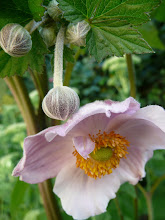
 my photosBLOOMS FOR JUNEI have three varieties of Oriental Poppy in my garden.The red/orange one above sticks out like the proverbial sore thumb amongst other muted tones that is this side of the garden.It's not that I don't like it, I just don't like where I've put it!I was originally given a division by a good friend from a plant which originated from her parent's garden, so it has sentimentality. I've tried to move it, but it just keeps coming back.I've found Oriental Poppies are like that, once they've settled in they are very difficult to move. Rather like an unwanted lodger or squatter!
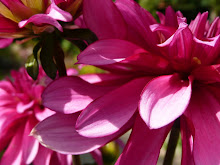
 I bought Patty's Plum for the garden when we first moved in. It was all the rage back in the late eighties, being regularly mentioned in gardening programmes and magazines alike. It's popular still now, even Carol Klein has recently mentioned having it in her Glebe Cottage garden in Devon.Again where it is just isn't right, it's in a position in full sun all day, and for anyone who knows this variety will know that the flower petals that open in a beautiful pink/purple colour, soon turn a rather muddy brown when scorched.
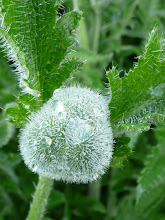
 Princess Victoria Louise is especially loved by the bees in my garden (see previous post).It's petals open in a salmon pink colour, which I confess to not liking very much, but soon fade to a pale pink which I much prefer.However much I love Oriental Poppies, I'd rather look at them in someone elses garden. The leaves can look scruffy (I'm an obsessively tidy gardener), the stems can droop, and when finished there's a gaping hole in the border.To get over this I keep the foliage tidy, and after flowering has finished I leave on the seedheads for a while, before cutting the whole plant back for a new flush of growth.Nothing goes to waste in my garden. The foliage is composted and the seedheads dried for decoration.o
 my photoPRIMROSEThe Primrose gets its name from 'prima rosa' meaning first rose. At the beginning of a new gardening year, the pretty 'primrose yellow' flowers are one of the first to come into bloom.Last year, immediately after flowering, I divided clumps which had become congested to multiply along banks around the garden. Now my 'plants for free' are coming through, with great success.
 my photoTRADESCANTHIAThe tradescanthia is what I would call a good value for money plant. This variety which has beautiful ice blue flowers was given to me as a division by a friend from her mum's garden. It doesn't take long for it to bulk up and over the years I had gained three large clumps. I noticed last year each clump was beginning to overpower all around it, so I reluctantly dug up and split each clump into four separate divisions making twelve new plants, sharing them with my dad, step-dad and keeping some for myself to plant in different areas of the garden. A good idea, each new plant has already flowered and settled into their new homes for the next year or two?
 my photoDIVIDING PLANTSSweet sentiment from one of my favourite children's illustrator, Mabel Lucie Attwell. Hope you likes!Today I have been dividing perennials and have made new plants from eryngium, achillea and coreopsis, and dug up three clumps of tradescanthia, moved one of them and giving the other two away. You can really save money by doing this, as these plants can cost a fortune to buy at this size from the garden centre, and at the same time you are able to swap your plants with others.I seem to be forever turfing out plants and moving them, every year, never being quite satisfied where I have put them.