OOO
t

08/09/2009


my photo

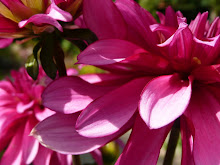
... the last climbing rosebuds of summer, reach for the sky
o

27/08/2009


my photo

... now here's proof I have a fox in the garden!

Can you believe this urban fox was quite happily sunning itself on a bare patch in our garden. I managed to take this photo through the window. Unfortunately it sensed movement, was spooked, and took off like a bullet into the undergrowth.

Just a relief I don't keep chickens!


o

16/08/2009


my photo

MICHAELMAS DAISY - love, daintiness, after thought

When colour is beginning to fade in the late Summer garden, the Aster or Michealmas Daisy as it is commonly known, is just coming into bloom. This perennial, with its pale mauve daisy-like flowers is a real treat, not only to the human eye, but to butterflies, bees and hoverflies.

Aster comes from the Greek word Asteri, meaning star. This celestial body puts on an outstanding performance when planted in a sunny position. The variety I grow is quite happy to self-seed in cracks between paving. Its tall, and wiry stems would benefit from staking, to protect from wind damage, if only I could push a cane through concrete! Its foliage can be prone to mildew, but when growing in extreme dry conditions like mine, this just doesn't happen.

This is my 200th post!

The names of all who leave a comment on this post will be entered into a draw, to win a garden/flower themed mystery givaway.

I shall pick out a winner on September 30th, so there's plenty of time to get your comments in.

o

15/08/2009


my photo

... seed heads of the iris plant

o

10/08/2009


my photos

PAINTED LADY

This beautiful butterfly migrates from North Africa. We have seen a large population this year. They don't hibernate over winter in this country, and in autumn some will make the long journey home, and the ones remaining will die.

A plant they seem to love is verbena bonariensis. I counted nine on these plants at one given time yesterday!


Look at me, from a different angle!

o

09/08/2009


my photos

BARRINGTON COURT

Barrington Court, an attractive 16th century house, came into the possession of the National Trust in 1907. Set in Somerset countryside, this property is well worthy of a visit.


Take a stroll along basket weave paving, with fragrant lavender edging.


Walk past electric blue salvia, which makes a statement. One of many herbacious borders being influenced by Gertrude Jekyll.

o
Discover a spectacular White Garden, just one of a series of walled gardens.
o
u
A lovely feature, the 17th century stable block, adorned with rambling roses.
o

o
Barrington Court is built in an E-shaped style of the period, in Ham Hill stone. This side of the house is faced with meadow, a great natural habitat for all insects, especially butterflies.
o
o
The practice of forcing rhubarb didn't start until the early 19th century when a Chelsea gardener made a chance discovery by leaving a chimney pot over one of his plants. He found that depriving rhubarb of light made the stems shoot upwards, searching for light, which made for a more succulent-tasting product.
o

o
Looking down from the Tudor manor house which was restored in the 1920s by the Lyle family (of Tate & Lyle fame).
o
o
Espaliered fruit grows against high stone walls in the working kitchen garden with apple, pear and plum trees, as well as cherries.
o
A view from the kitchen garden. Sweetcorn is wind pollinated, and best planted in large blocks.
o
o
Another herbacious border, with swathes of planting.
o
o
Let's hope these bee hives are playing a part in helping to restore our dwindling bee population.
o
o

06/08/2009


my photo

... I remember my grandad growing bunny rabbits in his garden!

o

25/07/2009


my photo

HOVERFLY

A Hoverfly supplementing its diet with fennel nectar, and aiding pollination too.

A Hoverfly will lay its eggs where aphids have become established. The eggs hatch into larvae, which in turn eat the aphids.

To look upon as a garden friend.
u

18/07/2009


my photo

HOLLYHOCK

I have one Hollyhock plant in the garden, and it looks stunning! It has lots of flowering side shoots and one main stem which soars into the sky, and the leaves seem pretty free of rust this year too. Picking off infected leaves during its early growth may have helped?

Did you know Hollyhock flowers are edible? They can be picked fresh and used in salads or brewed for tea. Buds can be sauted in butter, and leaves (I would imagine rust-free) can be used in middle-eastern recipes.

Please be aware if you suffer from allergies.
o

11/07/2009


my photo

- fennel and bird
u

04/07/2009


my photos

LYSIMACHIA - YELLOW LOOSESTRIFE

Lysimachia punctata, a perennial with whorls of buttercup-yellow flowers which reaches medium height in a border. Mine is situated in a sunny position and seems happy enough, although I would say, with lack of moisture, it does possibly go to seed more quickly than it would in a semi-shade position.

On a recent visit to Barrington Court in Somerset, owned by the National Trust, I noticed it was being used alongside a stream, which seemed to suit this plant very well.


Over the years I have tried to restrict the use of yellow around the garden but having inherited the aforementioned yellow Lysimachia, yellow shrubs such as Hypericum and the bog loving yellow Iris pseudecorus, the only way to completely elimate it would be through much hard work. Anyway, why should I go to all the trouble? Each in their own right makes a great addition to any garden, most noteably a cottage style one, and yellow plants do look great when planted alongside the cool colours, and even with a hot orange!

I know the great late Christopher Lloyd found great pleasure in mixing every colour under the sun together, and having visited his beautiful gardens at Great Dixter rate his ideas with much esteem, but I myself find yellow so difficult to get right alongside the other colours in my garden.

As you can see by the photo above, it is not impossible, the hot yellow of Lysimachia against the cool cream of Iris, makes for a perfect combination.
y

26/06/2009


my photo

KESTREL

I was so fortunate to have my camera at the ready for this shot of an adult male kestrel hovering for its prey, without success. It was loitering with intent overhead for a fair while.

A kestrel's head will remain still whilst hovering, to make detection of its prey much easier.

Please click on photo to enlarge.

u

24/06/2009


my photo

BLACKBIRD

A fledgling up to its tricks, enjoying the berries from an Amelanchier tree.

y

18/06/2009


my photos

CEPHALARIA - GIANT SCABIOUS

Giant being the operative word! This plant requires a lot of space.

A hardy perennial with pincushion heads of lemon-yellow flowers. A lovely addition to a cottage style garden, and makes a pretty stem for cutting. Its nectar is loved by both butterflies and bees.


The weather here in the South has been gorgeous, with warm, sunny days, with an odd blip here and there!

With longer daylight hours, evenings have been spent titivating, with more serious gardening only happening on days off.

Maybe now's the time to sit back and enjoy the fruits of one's labour!

u

14/06/2009


my photos

THE SOUTH OF ENGLAND SHOW

A show celebrating countryside, rural life and farming, is held annually at the South of England Showground at Ardingly.


One favourite display of mine was From Plot to Plate, 'grow your own' harvested straight from the allotment, set amongst vintage kitchen and garden 'alia.


For the first time since the Second World War, food seeds are outselling flower seeds. No longer just a hobby to keep occupied in retirement, an allotment plot is popular with all ages. With organic produce and thrift on the menu, once vacant sites are now full, with long waiting lists.


Gromit measuring his marrow, with prize winning potential!


When it comes to Pot Leeks, among the men of Geordieland, size is important! Competitions date to the late 19th century, when miners began organising shows in clubs and pubs, paying a little each week to fund prizes.

Things have now become so serious that some exhibitors spend the night out with their vegetables to guard against intruders. It has been known for men to sleep with their leeks more often than they do with their wives!

A recipe for a traditional North East Leek Pudding, a recipe dating back to the 18th century.

u

22/05/2009


my photos

RAMSTERS AND THE CALL OF A CUCKOO

Today I re-visited Ramsters, a beautiful mature woodland garden, south of Chiddingfold in Surrey.

Today I heard, what was for me, the first Cuckoo call of the year, which famously heralds the arrival of Summer here in the UK.


Cuckoo, cuckoo, what do you do?
In April I open my bill
In May I sing night and day
In June I change my tune
In July away I fly
In August go I must - Anonymous

I must say I felt honoured to hear the unmistakable two note call of the male Cuckoo, a sound rapidly disappearing from our countryside.

Have you heard a Cuckoo this year? Please leave a vote in my June poll on the sidebar. (Yes - 4, No - 10)

Do I like the Cuckoo? I'm in two minds.

Click
here to watch a short clip of how this secretive bird behaves - and that of the Cuckoo Duck! - narrated by David Attenborough. I'd love to hear from you with your thoughts?


O
Take a woodland walk through Ramsters, a peaceful and tranquil setting covering twenty acres, originally laid out in the early years of the century by Gauntlett Nurseries of Chiddingfold.
O
O
Not only is this a garden of rhododendrons, azaleas, camellias and magnolias, it features many rare trees and shrubs, wildflower areas, ponds and a bog garden.
O
h

28/04/2009


my photos

BERBERIS

Berberis thunbergii atropurpurea loses its leaves in winter but looks amazing at this time of year with its coat of attractive purple/green leaves and delicate yellow umbels.

A year or so back we gave this shrub a severe prune, but has returned to reign supreme!


This prickly shrub provides berries for birds through autumn to winter and makes great ground cover and a safe nesting site too. Bees will be attracted to the flowers.

A good value for money shrub which will provide interest in the garden all year round. Does need a prune once in a while to keep at a desired height and a good shape.

u

25/04/2009


- eryngium seedheads


24/04/2009


my photos

LEMONS AND LIMES

A lemon shade potentilla at the front of a border. A hardy perennial which is long flowering and will self seed around the garden.


A lime shade euphorbia, in the middle of a border. A compact, suckering variety which can be useful as ground cover. Will tolerate dry shade and looks great in a woodland setting.

Always be cautious when handling euphorbia, the sap is poisonous and irritates the skin.


22/04/2009


my photos

YELLOW DEADNETTLE AND BUMBLEBEE

Not as it may seem, the deadnettle is not related to the nettle family, but is a member of the mint family, hence it invasiveness in the borders. Even so I have found it fairly easy to pull out in areas where it is not wanted.

With its yellow-flowered angular stems and hairy non-stinging leaves, it looks lovely blending in with the fresh greens to be found in the garden at this time of year.


Many bees, bumblebees and moths are attracted to the flowers which contain nectar and pollen. I did spot a red-tailed bumble bee with its head in a flower too.

If you want to help the survival of the bee species, add it to your garden and you will discover why this plant is sometimes called Bee Nettle, a fitting name.


21/04/2009


my photo

IN THE GARDEN

I captured this beautiful comma basking in the sunshine today.

I had a day off work and spent most of the day in the garden, which was a real tonic.

By having this time to myself, has inspired me to start a new blog - a west sussex garden diary - where I shall record, in words, my sightings of flora and fauna in the garden.


19/04/2009


my photos

AURICULA

A year or so back I acquired some very sorry looking Auriculas from my step-dad, in need of tender loving care. I decided what was best for them was to pot up in small plastic pots and to allow them whatever time necessary to rejuvinate.

Having always planted Auriculas into terracotta pots, I decided that once healthy I would plant these ones straight out into the garden. So that's what I did and they have been a great success.


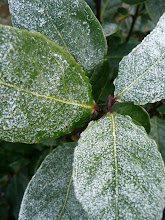
Often there is a covering of white powder on the leaves of an Auricula, and in Auricula circles this is called 'meal'. The flower can have a circle of 'meal' on their faces too.


Have you any terracotta pot casualties after last winter's heavy rainfall and frosts? How about placing a broken pot at the foot of a plant giving the illusion of the flower sprawling out?

I have more than enough crocks and by using much loved, if not broken, old terracotta pots in this way, I can continue getting use out of them for a good few years to come, hopefully!


13/04/2009


photo - rspb website

SOWING SEED & A SWALLOW

I may have to sacrifice growing my own plants from seed this year. I had so many plans, but just haven't had nearly enough time to commit to the garden. I have yet to sow a single seed!

I had word from my Dad the other day. He has seen the first swallow of the summer, so this is the time he starts getting his seeds on the go.

Do you follow a set pattern for seed sowing?

Have you seen your first swallow of the summer?


03/04/2009


my photo

SPARE A THOUGHT FOR WILDLIFE

Back in January, Anna from Half An Acre invited me to write a short article to appear in the current edition of UK Handmade, a downloadable quarterly magazine. The content to be appropriate for the Spring season, tied in with the decline of insects and birdlife in UK gardens and how we might help.


'Spare a thought for wildlife and make space for nature in your garden. A large area isn’t essential, as in just a metre square a small wildlife sanctuary can be created.

Just by providing a feeding station and birdbath, or planting a tree or shrub will supply garden birds with food and water, nesting area and a safe haven free from predators, such as the neighbour’s cat!

A woodpile in a quiet area will attract beetles and many other insects, who will explore the nooks and crannies that appear once the wood starts to decompose. Frogs, toads and hedgehogs will discover the warm, dry space underneath, to hibernate until warmer weather arrives.

Encourage a small patch of stinging nettles, maybe a weed to us, but a great food source for ladybirds and butterflies. The latter will lay eggs on the leaves, which in turn provides food for any lodging hedgehog.

An old branch left amongst ivy makes a great perch for wrens, who love to bustle through the leaves looking for insects, and robins will use it too. Ivy produces berries, which one-by-one will be picked off by a hungry blackbird or thrush.


It’s easy, and by going wild, you too can help conserve the wonderful wildlife we have around us.'

An edited version of the above appears in the magazine on Page 30.

I have often wondered how I'd feel to have my own column. Thanks to Anna, now I kind of know!


See also Diana at Pebbledash for a delicious nettle soup recipe. A great way to encourage humans into your home!