OOO
t

05/06/2008


my photos

GREAT DIXTER

I don't know about you but every now and again I visit a garden which instantly becomes my all time favourite, and this one is no exception. Set in beautiful countryside near Northiam in East Sussex, pretty much on the border of Kent, is Great Dixter House & Gardens, family home of Christopher Lloyd, one of the great plantsmen of the 20th and 21st centuries.


The front path which leads you to the entrance through meadow, which in the height of summer I can imagine absolutely buzzing with bees and fluttering butterflies feeding on the rich nectar.


Look at this for an impressive entrance porch. Click on any of the photos for a closer look at the planting schemes.


The Long Border which was absolutely stunning, although I really would have liked my secateurs at hand to trim the phlomis which had spilled so far out on the path. Maybe another one of those round tuit jobs we all have around the garden at this time of year?


The High Garden. A path leading you through a vista of annuals, perennials and shrubs. The epitome of an English country cottage garden.


What about this beautiful pond for a water feature, surrounded by plants who like to get their feet wet, which include yellow iris and gunnera.


What a shame, not allowed in here! No problems, there is a vast nursery in the grounds which sells the largest selection of plants that I have ever seen, some common but many unusual. I bought one with a lovely blue pea-like flower as a momento of our day, although I shall have to update you on the name, as a new discovery for me.


I couldn't get over these lettuces! Maybe the netting keeps the bunnies out, and where are the slugs and snails?


Finally, after about half a dozen circuits of the house, what a welcome relief to find no-one was occupying this lovely bench.

27/05/2008


my photos

PINK

These are a selection of pink plants from my recent trip to Ramster gardens. The rhododendron above reminds me of strawberry ripple ice-cream.


I think this pink azalea would go very well with a dark purple flower, any ideas?


This rhododendron looks lovely against the burgundy of the Japanese maple.


I love colour clashes in a garden. I like to see hot pink with orange.

23/05/2008


http://www.londondailynaturephoto.co.uk/index.php

SPARROWS FEEDING

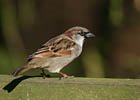
Whilst I sit on my PC I have the privilege of being able to look out into my garden, and for the past fortnight or so the sparrows have been a huge distraction to me. Every year is the same, I sit marvelling at the spectacle of parent feeding their quivering young who are begging for food. Then watching the little inexperienced flyers attempt to take off, struggling to get their undercarriage off the ground. It just brings a smile to my face every time I see it.

Young sparrows leave the nest when fully feathered and are not able to fly for a couple of days. The parents generally look after them for a fortnight. I hope the majority survive in my garden although predators are always lurking, the magpies have been making their presence known.

Unfortunately what was a once a common sparrow has now found itself on the red list here in the UK, although I must say there seems no shortage in our garden. I put this down to the fact that we have a very wildlife friendly garden with lots of hedging, shrubs and trees which goes to encourage wild food for the very young, aphids, flies, grubs and spiders. I top up the birdbaths and I put bird food out all year, although I don't use peanuts, sparrows will eat seeds and grain.

The image I have used for this post is called Feed Me, courtesy of Nic from London Daily Nature Photo. Please click on the link to discover his great photography, but please do not use any of Nic's images without his permission.

19/05/2008


my photos

RAMSTER GARDENS

A beautiful mature woodland garden at Chiddingfold on the Surrey/West Sussex border.

I have visited two lovely gardens in the space of a week. The weather was warm and sunny for my visit to Highdown gardens, but on Friday when I visited Ramster gardens the temperature had definitely taken a plummet and it was cloudy, cold and damp. Today the sunshine is back, so with lifted spirits I am showing you my photos of yellow azaleas and rhododendrons, both acid loving plants.


In May the garden reaches its peak where the azaleas and rhododendrons provide a brilliant display, while the carpet of bluebells fill the air with their scent (although unfortunately these were over for our visit).


There are many rare trees and shrubs at Ramster and wonderful wild flower areas where in June bring orchids. There is a bog garden with giant gunnera leaves which I have featured in my post below.


The gardens at Ramster were laid out in the 1900s by Gauntlett Nurseries of Chiddingfold, who were pioneers in importing new shrubs, trees and ornaments from Japan. One hundred years on many of the original plants are still thriving in the garden today.


The house which is not open to the public is based on a Jacobean farmhouse, but the Long Hall is a popular venue for civil marriages, wedding receptions, dinners and corporate events.
Admission to the gardens is £5 but you can come and go as you please which we did having a picnic lunch in the middle of our visit, but if you have no picnic there is a tearooms. I resisted but there is also a plant sales area too!

18/05/2008


my photos

FERNS & GUNNERA


The magnificent gunnera (giant rhubarb) needs warm soil on a damp site with lots of space!


The makings of an impressive stumpery.


The woodlice are going to love it in here!

13/05/2008


my photos

HIGHDOWN GARDENS

I would like to show you the photos of plants growing on chalk downland soil, taken on my outing to Highdown Gardens in Worthing, which is open to the general public free of charge (although donations are very welcome). Above the most blousy tree peony I have ever seen.


Highdown Gardens is one of the least known about gardens in the area, but it is one that offers a unique collection of rare plants and trees. The views from the gardens are beautiful and include the sea and the South Downs. Above is a very pretty herbaceous peony.


The garden looks its best in spring and early summer when there is a colourful succession. A lovely yellow peony this time.


The whole garden has been deemed a National collection. Above a vivid orange rhododendron.


A beautiful purple bearded iris. The garden was created during a period when many expeditions were going out to China and the Himalayan regions collecting rare and beautiful plants.


Volunteers meet once a month on a Friday morning to assist with a variety of light conservation work within the gardens. They are always on the lookout for new helpers. The pink cherry blossom above was hanging in clumps from the branches.


The beautiful handkerchief tree (also known as the dove or ghost tree) with white bracts which hang down and flutter in the breeze. Discovered growing in China in the 1860s by the French explorer Pere Armand David. This tree first flowered in England in 1906.

This is the most amazing tree and I would very much like it in my garden.

07/05/2008


my photo

PARSNIPS

Remember my mutant parsnip post? Parsnips modelled on the well known Dr Who character The Ood. Well this one has forked, but it is the longest one I have ever had, from the top of the foliage to the root of the parsnip, it measures just over 55 inches, and is in danger of taking over my garden bench, if not the world! My ever so slightly clay soil must half be fertile!

Thanks to Na at Shadows and Clouds, I now know these parsnips are going to seed!

04/05/2008


my photo

AND THE WINNER OF MY 100 GARDEN BLOG POST COMPETITION IS ...

Michele from Cowboys & Custard, who correctly guessed five out of the six mystery plants I asked you to name? Well done Michele, you have got the birdie, and she will be winging her way to you next week. Luckily the birdie hasn't had too much time to settle here in my garden, although she had enough time to earmark a very comfortable, if not rather small, nesting box!

The answers are:
a) lamium maculatum (deadnettle) - an evergreen ground cover with yellow flowers
b) geranium (cranesbill) - a hardy perennial with small pale pink flowers
c) sedum spectabile - a succulent foliage with pink clusters of flowers
d) echinops ritro - a spiky-leaved architectural plant with purple thistles
e) potentilla (cinquefoil) - a strawberry-like leaved perennial with red flowers
f) centaurea montana (knapweed) - a clump forming perennial with deep blue cornflower-like flowers

Michele has created a beautiful garden on a slope in Bath, using a very well thought out landscape design with well stocked borders, which contain some very healthy-looking plants. Take a look at Michele's latest post where she has some photos taken from different vantage points. Lovely!

Thank you to everyone else for having a go, you all did very well!

Louise x

03/05/2008


my photo

GARDENING GLOVES

Do you always wear gardening gloves when working in the garden? That was the question I asked in the April poll. It turns out ten of you do, and thirty-five of you don't.

There is no doubt that gloves are a necessary piece of gardening apparel, but most of the time I don't wear them for general gardening, which shows on my hands, dirty fingernails and rough skin, and have to buy handcream by the gallon! The gloves above were bought for me, they fit me perfectly, and I will wear them, sometime?

Subject to the contrary if the soil is very wet, I do wear the very handy latex gloves you can buy in boxes. If the soil is dry I'd much rather get my bare hands in. Of course when handling shrubs and trees with thorny prickly branches it is necessary to wear the thick leather kind of gardening gloves, otherwise hands and arms are torn to shreds, and I do keep a pair in the car for when I pay the refuse tip a visit, they come in handy when emptying out the bags.

29/04/2008


my photo

EUONYMUS FORTUNEI

I cannot declare to being a huge fan of this shrub, but we inherited quite a lot when we moved here. Although at this time of year the colours of the variagation do look good together. It is important to remember with any variagated foliage shrub to cut out any stems which revert back to plain green.


28/04/2008


my photo

KERRIA

This double-flowered variety of Kerria (Japonica Pleniflora) is also known as Bachelor's Buttons, Jew's Mallow and Japanese Rose. A really pretty shrub to have around the garden at this time of year. I really like the combination of the 'custard powder' yellow of the blooms against the lime green of the leaves.

It will grow just about anywhere and if left to its own devices can reach up to 6ft tall. It will also spread by suckers which grow from its creeping underground root system. A plant which is best kept in check by pruning out all the old flowering stems.

William Kerr a protégé of Sir Joseph Banks, the famous 18th-century naturalist and plant collector, bought this particular variety back from China in 1804. By 1838 it was so common it was to be found in the gardens of labourers cottages!

This post is for my blogpal Daffy from Approaching 40, she has a delightful specimen in her garden too!

25/04/2008


my photos

PRIMROSE - I can't live without you, Early youth, Young love
POLYANTHUS - Pride of riches

I like to have some primroses or polyanthus in pots at this time of year, and I am not alone, the woodlice do too!

This year I opted for a mixed tray of white and a pink/orange colour, and I have made an interesting observation. The white flowers have been untouched and the pink/orange have been nibbled to death! Does this mean woodlice are repelled at the sight of white? I need to do more investigation? Has anyone else noticed this?


Great feast for the woodlice community in my garden, hundreds of them! Although extremely annoying in this instance, I really don't think woodlice do too much harm otherwise, so I will continue to invite them into my garden as a friend!

19/04/2008


my photo

BERGENIA

Also known as Elephants Ears, this perennial is naturally found in Siberia. The large glossy leaves become increasingly more purple at this time of year, and are a great contrast against the greens in the border.

A few years back a TV gardener doing a makeover programme, said he really disliked this plant, but I think it has a place in the garden. I agree that during the year the leaves can look a bit untidy, but at this time of year they come into their own, and look at the flowers to prove it.

16/04/2008


my photo

100 GARDEN BLOG POST COMPETITION

I really look forward to this time of year in the garden when there is new growth on plants, and plants are re-emerging from their winter sleep; and the birds are singing, gathering nesting material, busy making a warm and cosy home in readiness for the laying of their eggs, and the imminent arrival of their tiny fledglings.


This is the theme I am using for my competition to mark the fact I now have 100 garden blog posts behind me. The prize is the lovely bird above, not sure which bird species she comes from, but attractive nevertheless! She wants to go to a home where the occupants are hard working and industrious, just like she is, so there is some thinking involved.

The rules of the competition are to name all six plants below. They are all perennials and these photos were taken of new growth. Please leave your answers as a comment listing your answers from a) to f)


a)


b)


c)


d)


e)


f)

The entrant who guesses the most correct will get the birdie. In the event of a tie, I shall put all relavant names in a bird's nest and pull one out! I shall choose a winner from all entries on Saturday the 3rd of May.

Now get guessing!

07/04/2008


my photo

PIERIS

Today the weather is a welcome improvement on yesterday, a mixture of sunshine, blue sky and marshmallow clouds, intermittently being overcast by huge threatening black clouds bringing with them sleet/hailstone showers. I took the photo of the fiery red growth on this Pieris 'forest flame' this afternoon whilst the sun was still out.

An evergreen shrub which I have growing in a pot, placed in partial shade. It likes an acid PH and has white flowers in Spring.

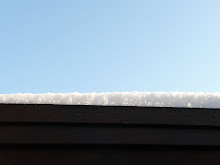
The photo below was taken yesterday, and look at the depth of snow on the bench. Now we don't often see this!

06/04/2008


my photo

SNOW

Correct me if I am wrong, but I think this is the first snowfall we have had this year in West Sussex? It is quite an unusual sight these days, and by lunchtime the ground had become blanketed in the white stuff and some quite deep drifts had formed in parts of the garden. By mid afternoon with the temperature rising, the snow quickly began to turn to slush.

I had to be quick to catch a photo of the weight of the snow on the white blossom of the Amelanchier which is also known as Snowy Mespilus.

03/04/2008


my photos

COMPOST

Do you make your own compost? This is the question I asked in my poll for March. Thanks to everyone who voted, a record number of forty-four! Thirty-five of you said you do make your own compost, and nine of you don't.

I am fortunate enough to have a large garden with space to sacrifice for composting, and many of you have allotments which is a great place to be able to do this too.

From this above ...


... the result is this, which is full of worms! At this time of year I leave this lovely 'black gold' in situ to grow Summer Squash and at the end of the summer season, it is bagged up to be used for potting up seedlings, cuttings or divisions, either in the autumn or spring.

If you would like to compost, but don't know where to start, click on garden organic for everything you need to know.

28/03/2008


my photo

BERBERIS DARWINII

Also known as Barberry, this evergreen shrub was discovered in South America by Charles Darwin in 1835. If you want colour in your garden at this time of year, this is the shrub to have. It bears masses of small clusters of the brightest orange of flowers, and very often has a second flush in the Autumn.

Mine stands alone, but used as a full hedge its thorniness is a great deterrent, adding security to the garden. It requires careful pruning, as it has spiny holly-like leaves which will tear your hands to shreds if you are not wearing thick leather gardening gloves. This is one occasion when I do wear gloves, people who know me know that I would rather get dirt up my fingernails, although saying that, those latex disposable gloves come in handy for various tasks around the garden!

A great use for the prunings, is to lay them over your freshly dug over beds to keep the neighbours' cats off, don't get me wrong, I love cats, but my garden is not to be used as a WC for all and sundry!

24/03/2008


my photo

PULMONARIA - Thou art my life

Also known as lungwort, I believe because of the speckled leaves, although the leaves on mine aren't speckled? These have to be at the top of my list of favourite plants for Spring, one plant which I eventually want more of in the garden. I did originally have two plants, but now only have one, like so often you put in a plant, never to see it again!

This plant seems to like being situated in a dappled shade, semi-woodland position, mine is on a bank facing north, in moist soil.

20/03/2008


my photos

HAPPY EASTER

Have the happiest of Easters
And the springiest of Springs!


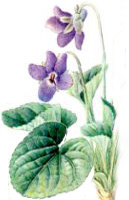
Violet is for faithfulness
Which in me shall abide
Hoping likewise that from your heart
You will not let it hide

The sweet scented and the dog violet are both classed as herbs, so can be used in a salad. Another use is in cordials, preserves and tea, and don't forget crystallised on the top of cakes and chocolates.

Violets can also used for medicinal purposes in the form of poultices to relieve ulcers, a tincture for sore throats, to ease the symptoms of catarrh and to lessen rheumatic pain.

The violet, such a tiny delicate flower with so many uses.

Watchfulness, faithfulness, I'll always be true

17/03/2008


my photo

WHITE VIOLETS - Let's take a chance

Since medieval times the violet has represented the month of March in the flower calendar because this was the normal month of its emergence.

I have discovered C W Groves & Son, a nursery in Bridport in Dorset, which specialises in various species of violet. Another place to visit, when we are next down that part of the country.

Another violet post coming soon.

Elaine from Feel My Felt asked if these violets are growing out of paving, and noticed the two other plants in the photo. Yes they are coming through a crack in the paving, they have self-seeded here. The two other plants in the photo, are sedum which will grow just about anywhere, and herb robert, which is a member of the geranium family, practically a weed in my garden. I am forever pulling it up, the whole plant has a very pungent smell!

15/03/2008


my photo

HELLEBORE - Scandal

You have already seen photos of three of the varieties of hellebore I have in the garden, well this is the fourth.

I was really fortunate, as last year my mother-in-law's neighbour was having an area outside of his house paved, and he needed homes for his well established clumps of hellebores. Well as not to appear greedy, I came home with out five good sized plants!

I potted them on into one litre pots, to let them die down over the winter period, and then this year, once they had started to spring back into growth again, I planted them out in the borders.
I can't wait for next year to see how they have spread?