OOO
t

27/07/2008


my photos

SUMMER SUNSHINE

The hottest day of the year so far - 31 degrees. It may not sound a big deal to some of you living in the parts of the world you do, but for here in the UK, after the summer experienced so far, this temperature is positively tropical!

One of three plants basking in the summer sunshine today is Coreopsis grandiflora Mayfield Giant which can tolerate dry conditions, and flowers on and on, although does need deadheading to keep flowering to its maximum potential.


The first marigold of the year. These came out of a mixed pack of annuals given to me by a friend, sown late so only just starting to produce flowers. I always start the seeds off in pots and then transplant to where I choose in the garden. This year I have planted on into wooden troughs, facing east. When in containers water when necessary.


Nasturtium, one half of the variety St Clements, which is happy to be in dry soil. A lovely mix of yellow and orange, zingy citrus colours. Perfect for brightening up a salad and your day!


26/07/2008


my photo

GAURA

One of my most favourite plants in the garden is Gaura lindheimeri, Whirling Butterflies.

Gaura means superb, and this plant truly is. Flowers appearing along delicate stems in succession throughout the summer. In fact it goes on for months and needs no deadheading!

This plant is great for filling gaps in preferably well-drained soil, although mine seems to like a little mulch around the roots. It is a native plant of Texas and Mexico, where it is plentiful. It needs a good space and in my garden I have allowed for a two foot spread and height, although this is only approximate.


24/07/2008


my photo

THE CALENDAR - PART ONE

I knew when Summer breathed
Not by the flowers that wreathed
The sedge by the water's edge
Or gold
Of the wold
Or white and rose of the hedge
But because in a wooden box
In the window at Mrs Mocks
There were white-winged shuttlecocks.

By Barbara Euphan Todd

22/07/2008


my photos

BLUE SKY AND SHADOWS

Look at this blue sky, not one cloud in sight. This is what the weather is like today, here along the south coast of England, and breathing a sigh of relief can guess that maybe our long awaited summer has finally arrived.

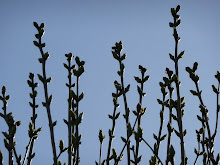
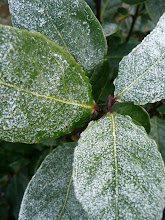
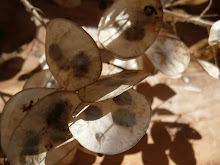
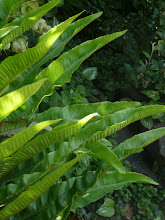
The sunshine has been casting some really lovely shadows around the garden. What plants are these shadows being cast from? Just for fun leave me a comment with your guesses and in a few weeks or so I shall give you the answers.

Shadow number 1.


Shadow number 2.


Shadow number 3.


GOLDFINCH

These chatty little birds have been down to the birdbath again this morning, the slightest movement from her indoors and they are off again!

I first noticed these small, bright and colourful birds around the garden a couple of years back, I can't say I had ever noticed them before. I first became aware of their song, almost a twinkle and very distinctive, and seemingly using our television aerial as a prominent perch.

These birds migrate to southern Europe, but many now stay due to our milder climate. I suspect my resident birds have nested in a neighbour's hawthorn tree, on numerous occasions seeing them flit in and out.

Their long thin beaks are perfect for extracting seed; thistle, teasel, dandelion and burdock, and in the summer months will also pick off small insects.


The goldfinches are loving the thistle seed, and have it all to themselves. For many months the feeder hung in a less manicured part of my garden, untouched, but is now two-thirds empty and will need a top-up soon.

A group of goldfinches is known as a charm and they certainly don't fail to live up to their collective noun.


my photo

TEASEL

A photo of a dry teasel head taken from alongside the banks of the River Adur in West Sussex, whilst on a cycle ride a few months back. This plant is a biennial, but once introduced is assured to self-seed freely.

A fun thing to do is to make a teasel hedgehog, so click on the link to see how.

21/07/2008


my photo

SAVE OUR BUTTERFLIES WEEK 19-26 JULY

These two small white butterflies stayed coupled together for quite a while, fluttering from plant to plant, with me in hot pursuit! I very much wanted to get a photo, having no memory of ever having been witness to this stage of the life cycle of a butterfly. I did feel a little guilty though, for not giving the pair any privacy!

I shall watch out for the next stage, those now fertilised eggs being laid on my nasturtium plants no doubt?

19/07/2008


my photo

FUNGI

Many-zoned Polypore? A widespread bracket fungus which grows on dead stumps and fallen branches of deciduous trees, often in tiers. Each bracket is semi-circular and the upper surface is zoned with concentric rings of different colours. It is found all year.

Taken on my visit to Ramster gardens at the end of May, after spotting it growing in damp, boggy conditions, close to the water's edge.

16/07/2008


my photos

PLANT COMBINATIONS ONE

From time to time in my garden I accidentially stumble upon a great plant and colour combination. Above you can see steely blue sea holly (eryngium), which is a warm colour, growing alongside vivid orange crocosmia, which is a cool colour, coming from opposite sides of the colour wheel, but equally winning one's attention.

A colour from one side forms a contrast with a colour on the opposite side of the colour wheel. The most intense contrasts are between colours that lie directly opposite one another, ie blue with orange.

The Gardener's Book of Colour is one of my favourites. Andrew Lawson with his artist's eye and scientist's training, shines a new light on using colour in the garden. Authoritative and accessible, this book will stimulate your imagination and put exciting new ideas within your grasp. It is a book no gardener will want to put down, which includes me!

15/07/2008


my photo

REDCURRANTS

Currants, including red ones, have the highest content of fruit acid of all berries. They also are very high in vitamin C, vitamin E and fibre. They grow in grape-like clusters on sturdy perennial shrubs.

The two bushes have given a good crop this year, which is good, but I do find harvesting them a bit fiddly and time consuming, and always put off doing it until the point when I really do have to.

Now I have picked a couple of punnets full, I wonder what I can do with them?

(punnet) - a small, square basket used for holding soft-fruit.


09/07/2008

#
my photo

TOAD

Not being an expert on amphibians I presume with its warty attire, this is a toad? Anyway whatever, it was unintentially disturbed when I shifted a log from a log pile.

I hope the poor chap recovered, it seemed to turn to stone when I was taking this photo. I suspect the playing dead, looking like concrete look, is a defence mechanism against predators.

Does anyone know?

07/07/2008


my photo

POPPIES

Did you notice poppies were voted the most favourite self-seeder in my June poll receiving 43% of the votes? Nigella (love in the mist) and verbena bonariensis came in joint second with 23%, and borage trailed in last with 10%. I have all these self-seeding in my garden, hence the choices!

Luckily I took a photo at Denmans of their colourful patch of poppies, because in my garden the ones that have flowered have now gone to seed. The flowers only last a day or so and with the winds we have been having they haven't stood much of a chance.


I was very kindly given this Arte Y Pico award recently by Gillian at Reflections in the Afternoon whose lovely blog shares my liking for the garden, illustrations and artwork. I would like to pass it on to Christy at Sweet Tidings. She has already received this award, but I am sure she won't mind receiving it again! If you haven't already made a visit, Christy has a lovely blog packed with crafting, cookery and lots more besides.

04/07/2008


my photos

LAVENDER - Loyalty, Love, Devotion
AND BEES

Lavender's blue, dilly dilly, lavender's green;
When I am king, dilly dilly, you shall be queen.
Who told you that, dilly dilly, who told you so?
'Twas my own heart, dilly dilly, that told me so.


Call up your men, dilly dilly, set them to work;
Some to the plough, dilly dilly, some to the cart;
Some to make hay, dilly dilly, some to thresh corn;
While you and I, dilly dilly, keep ourselves warm.


If I should die, dilly dilly, as well may hap;
Bury me deep, dilly dilly, under the tap;
Under the tap, dilly dilly, I'll tell you why;
That I may drink, dilly dilly, when I am dry.

Anonymous

Lavender's green, dilly dilly, Lavender's blue;
If you love me, dilly dilly, I will love you.
Let the birds sing, dilly dilly, and the lambs play;
We shall be safe, dilly dilly, Out of harm's way.


I love to dance, dilly dilly, I love to sing;
When I am queen, dilly dilly, you'll be my king.
Who told me so, dilly dilly, who told me so?
I told myself, dilly dilly, I told me so.


An English folk song dating back to at least 1849, and is said to be connected with the festival of Twelfth Night and the choosing of the king and the queen. I am not sure if the two additional verses above were part of the original rhyme?


In Provence in France, hives are taken to the fields of lavender in order to produce Lavender honey which is pale and gold with the flavour of the flower. The bee above hasn't had to be taken to the Lavender, it has invited itself!


I often find one of these around the garden, a bee hole. A home for ground nesting bees, usually in a dry and undisturbed part of the garden.


02/07/2008


my photos

DENMANS

Situated just off the A27 heading West, just past Fontwell racecourse, is Denmans, the home and garden of designer John Brookes. Above a magnificent Inula, the colour of sunshine which I haven't seen much of today!


Mainly laid to gravel with sweeping grass paths meandering through approximately four acres, most plants are left to their own devices and to self-seed, which gives the gardens a slightly untidy appearance is places, but this does make for a natural flow throughout the borders.


Can anyone tell me what the two plants above are? I am not familiar with them.


Home to many plants which provide good structure around the garden, like the impressive Acanthus above.


And home to lots of colourful budgerigars in the aviary too!

29/06/2008


my photo

GOOSEBERRIES - Anticipation

I have one small gooseberry bush, another freebie from my Dad. It doesn't bear much fruit, only enough for me to pick off to eat raw as I am going around my garden business. I would love more space for more bushes, I just love them, and maybe if I had more, I could make my favourite jam or my most favourite crumble. For the moment I shall just have to go out and buy them from someone else.

The Eat the Seasons website gives all the information you would ever need to know about a gooseberry.


I really like these Gooseberry Patch calendars which you can buy from Amazon. I must remember to get one for 2009!

28/06/2008


my photo

RASPBERRIES

So far a great year for soft fruit. My raspberry canes which my Dad gave me a couple of years ago are producing a lot of fruits for me. I must confess not a lot are making it to the kitchen but today being an exception. I have bought a tub of cream and meringues and I am going to make an Eton mess! Crushed meringues and raspberries, mixed into whipped cream.

According to Robin Weir in Recipes From The Dairy, Eton mess was served in the 1930s in the school's sock (tuck) shop, and was originally made with either strawberries or bananas mixed with ice cream or cream. Meringue was a later addition. Nowadays, Eton mess consists of pieces of crisp meringue, lightly whipped cream and strawberries, all stirred together - hence the name 'mess' - Heston Blumenthal

A raspberry is made up from a cluster of pips surrounded by fruit pulp, all held together by a central core, which forms the berry.

26/06/2008


my photo

NATIONAL INSECT WEEK

This week is National Insect Week here in the UK, it runs from the 23rd to the 29th June. If you click on the photo above you can just about see the butt end of a lovely bee checking out the nectar in one of my foxgloves!

Honeybees in Britain are in decline. It is estimated that in 10 years time, if nothing is done to protect them, the honeybee will disappear from Britain by 2018, see Eco Home & Garden. No bees, no food on our plates as bees don't just make honey they pollinate more than 90 of the flowering crops we rely on for food.

Albert Einstein predicted that if something eliminated bees from our planet, mankind would soon perish.

Here is a list for plants for bees. I am sure lots of you have many of them already?

Don't forget, especially this week is - bee kind to bees week!

This post is dedicated to Life in Red Shoes. You guessed it, I have been out in the garden with my camera! Also to say to Lavinia Ladyslipper at The Birdbath Chronicles, I am still here!

20/06/2008


my photo

THE LONGEST DAY

Here in the Northern hemisphere we usually mark the longest day on the 21st of June, but because this year is a leap year, the longest day is one day earlier, the 20th of June. From now on the days will get shorter, so less time to spend in the garden.

Apparently Midsummers day is on the 24th? Traditionally on this day St John's Wort was gathered, thought to be imbued with the power of the sun. Other special flowers (Vervain, trefoil, rue and roses) were also thought to be most potent at this time, and were traditionally placed under a pillow in the hope of important dreams, especially dreams about future lovers!

18/06/2008


my photo

CENTAUREA MONTANA

Fortunately for me this lovely old-fashioned cottage garden plant self-seeds itself around here and there in my garden. The deep blue to violet flowers with a thistle-like centre and slender petals is not only attractive to me but also to bees!

14/06/2008


my photos

BLACKBIRD FLEDGLINGS

I was having a conversation with my dad yesterday of the fact that neither of us had seen any young blackbirds yet this year around in our gardens, my dad saying it was most unusual. Back home later in the day I was on the PC with the doors and windows flung wide open, and low and behold I realised I could hear a young blackbird. I very slowly moved outside and there they were, two fledglings along with the male. I quickly retreated back inside to grab the camera, my photos of birds usually blurred on 10 x optical zoom, but as it turned out I was quite pleased with these. Click on each one for a closer look at the speckly markings.


I have come to notice each year they do love feasting on these Amelanchier fruits along with the starlings.

A few days previously I had spotted a very scruffy looking male on our flat roof, maybe he had been doing all the work taking food in to the nest, which the female would have constructed out of grass and mud, usually low in a tree or bush, sometimes using a previous nest as a base. The young are fed for twelve to nineteen days and after leaving the nest they are split between the pair.

12/06/2008


my photo

TRADESCANTHIA

The tradescanthia is what I would call a good value for money plant. This variety which has beautiful ice blue flowers was given to me as a division by a friend from her mum's garden. It doesn't take long for it to bulk up and over the years I had gained three large clumps. I noticed last year each clump was beginning to overpower all around it, so I reluctantly dug up and split each clump into four separate divisions making twelve new plants, sharing them with my dad, step-dad and keeping some for myself to plant in different areas of the garden. A good idea, each new plant has already flowered and settled into their new homes for the next year or two?

11/06/2008


my photos

FROGS TWO

I thought I was taking a photo of one frog, the fine specimen below. It was the first I had seen this year, but when it jumped back into the undergrowth, I lifted up the canopy to take a closer look, and discovered a second one just sitting there staring up at me. I hope I didn't make it jump! I really like the photo above, the frog just looks so at home tucked up in the hartstongue fern.


Frogs spend most of their lives on land so give them long grass, leaf and log piles, trees and shrubs in your garden to feed and hibernate under.

What does a frog order in a restaurant? French flies and diet croak!

09/06/2008


my photos

IRIS

I love iris, but I only have three varieties in my garden, the most impressive being the white one above, which has huge flower buds right the way up the stalk. I separated rhizomes from the original clumps I inherited last year and made lots of new plants, although I shall have to be patient, I only had the pleasure of one flower spike this year, but I hope for more next.


The purple variety above came gratis from my great aunt many years ago, who had it flowering in her front south facing garden. I have moved it around several times, but have now found a home I, and the plant is happy with. It has a pleasant aroma.


Finally I acquired this yellow flag iris from my dad. It likes moist and boggy conditions. I have no pond, but I have found a suitable spot where the rain regularly runs into. It does get quite congested and needs dividing every now and again to encourage more flower spikes.

I would like more iris around the garden and if I had allotment space I would grow many different varieties, mainly tall bearded ones. My maternal nan was named Iris so they always remind me of her.

07/06/2008


my photo

CAMPANULA

This variety is glomerata superba. The stem bears many large headed clusters of dark purple-violet flowers.

This has to be my plant of the moment, and one of my many tasks for this year is to introduce it to different parts of the garden.

05/06/2008


my photos

GREAT DIXTER

I don't know about you but every now and again I visit a garden which instantly becomes my all time favourite, and this one is no exception. Set in beautiful countryside near Northiam in East Sussex, pretty much on the border of Kent, is Great Dixter House & Gardens, family home of Christopher Lloyd, one of the great plantsmen of the 20th and 21st centuries.


The front path which leads you to the entrance through meadow, which in the height of summer I can imagine absolutely buzzing with bees and fluttering butterflies feeding on the rich nectar.


Look at this for an impressive entrance porch. Click on any of the photos for a closer look at the planting schemes.


The Long Border which was absolutely stunning, although I really would have liked my secateurs at hand to trim the phlomis which had spilled so far out on the path. Maybe another one of those round tuit jobs we all have around the garden at this time of year?


The High Garden. A path leading you through a vista of annuals, perennials and shrubs. The epitome of an English country cottage garden.


What about this beautiful pond for a water feature, surrounded by plants who like to get their feet wet, which include yellow iris and gunnera.


What a shame, not allowed in here! No problems, there is a vast nursery in the grounds which sells the largest selection of plants that I have ever seen, some common but many unusual. I bought one with a lovely blue pea-like flower as a momento of our day, although I shall have to update you on the name, as a new discovery for me.


I couldn't get over these lettuces! Maybe the netting keeps the bunnies out, and where are the slugs and snails?


Finally, after about half a dozen circuits of the house, what a welcome relief to find no-one was occupying this lovely bench.