OOO
t

16/04/2008


my photo

100 GARDEN BLOG POST COMPETITION

I really look forward to this time of year in the garden when there is new growth on plants, and plants are re-emerging from their winter sleep; and the birds are singing, gathering nesting material, busy making a warm and cosy home in readiness for the laying of their eggs, and the imminent arrival of their tiny fledglings.


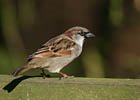
This is the theme I am using for my competition to mark the fact I now have 100 garden blog posts behind me. The prize is the lovely bird above, not sure which bird species she comes from, but attractive nevertheless! She wants to go to a home where the occupants are hard working and industrious, just like she is, so there is some thinking involved.

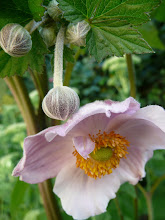
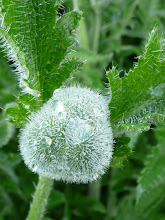
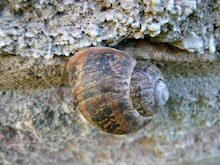
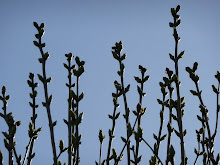
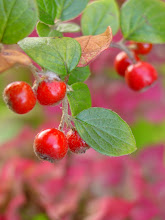
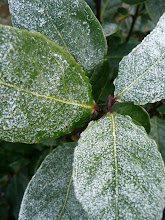
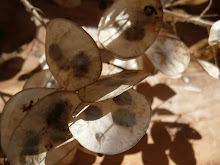
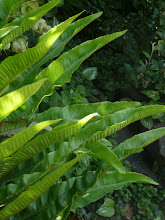
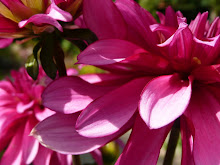
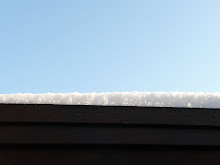
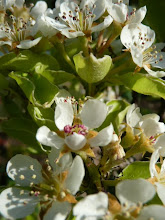
The rules of the competition are to name all six plants below. They are all perennials and these photos were taken of new growth. Please leave your answers as a comment listing your answers from a) to f)


a)


b)


c)


d)


e)


f)

The entrant who guesses the most correct will get the birdie. In the event of a tie, I shall put all relavant names in a bird's nest and pull one out! I shall choose a winner from all entries on Saturday the 3rd of May.

Now get guessing!

07/04/2008


my photo

PIERIS

Today the weather is a welcome improvement on yesterday, a mixture of sunshine, blue sky and marshmallow clouds, intermittently being overcast by huge threatening black clouds bringing with them sleet/hailstone showers. I took the photo of the fiery red growth on this Pieris 'forest flame' this afternoon whilst the sun was still out.

An evergreen shrub which I have growing in a pot, placed in partial shade. It likes an acid PH and has white flowers in Spring.

The photo below was taken yesterday, and look at the depth of snow on the bench. Now we don't often see this!

06/04/2008


my photo

SNOW

Correct me if I am wrong, but I think this is the first snowfall we have had this year in West Sussex? It is quite an unusual sight these days, and by lunchtime the ground had become blanketed in the white stuff and some quite deep drifts had formed in parts of the garden. By mid afternoon with the temperature rising, the snow quickly began to turn to slush.

I had to be quick to catch a photo of the weight of the snow on the white blossom of the Amelanchier which is also known as Snowy Mespilus.

03/04/2008


my photos

COMPOST

Do you make your own compost? This is the question I asked in my poll for March. Thanks to everyone who voted, a record number of forty-four! Thirty-five of you said you do make your own compost, and nine of you don't.

I am fortunate enough to have a large garden with space to sacrifice for composting, and many of you have allotments which is a great place to be able to do this too.

From this above ...


... the result is this, which is full of worms! At this time of year I leave this lovely 'black gold' in situ to grow Summer Squash and at the end of the summer season, it is bagged up to be used for potting up seedlings, cuttings or divisions, either in the autumn or spring.

If you would like to compost, but don't know where to start, click on garden organic for everything you need to know.

28/03/2008


my photo

BERBERIS DARWINII

Also known as Barberry, this evergreen shrub was discovered in South America by Charles Darwin in 1835. If you want colour in your garden at this time of year, this is the shrub to have. It bears masses of small clusters of the brightest orange of flowers, and very often has a second flush in the Autumn.

Mine stands alone, but used as a full hedge its thorniness is a great deterrent, adding security to the garden. It requires careful pruning, as it has spiny holly-like leaves which will tear your hands to shreds if you are not wearing thick leather gardening gloves. This is one occasion when I do wear gloves, people who know me know that I would rather get dirt up my fingernails, although saying that, those latex disposable gloves come in handy for various tasks around the garden!

A great use for the prunings, is to lay them over your freshly dug over beds to keep the neighbours' cats off, don't get me wrong, I love cats, but my garden is not to be used as a WC for all and sundry!

24/03/2008


my photo

PULMONARIA - Thou art my life

Also known as lungwort, I believe because of the speckled leaves, although the leaves on mine aren't speckled? These have to be at the top of my list of favourite plants for Spring, one plant which I eventually want more of in the garden. I did originally have two plants, but now only have one, like so often you put in a plant, never to see it again!

This plant seems to like being situated in a dappled shade, semi-woodland position, mine is on a bank facing north, in moist soil.

20/03/2008


my photos

HAPPY EASTER

Have the happiest of Easters
And the springiest of Springs!


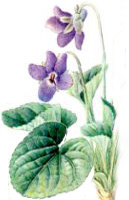
Violet is for faithfulness
Which in me shall abide
Hoping likewise that from your heart
You will not let it hide

The sweet scented and the dog violet are both classed as herbs, so can be used in a salad. Another use is in cordials, preserves and tea, and don't forget crystallised on the top of cakes and chocolates.

Violets can also used for medicinal purposes in the form of poultices to relieve ulcers, a tincture for sore throats, to ease the symptoms of catarrh and to lessen rheumatic pain.

The violet, such a tiny delicate flower with so many uses.

Watchfulness, faithfulness, I'll always be true

17/03/2008


my photo

WHITE VIOLETS - Let's take a chance

Since medieval times the violet has represented the month of March in the flower calendar because this was the normal month of its emergence.

I have discovered C W Groves & Son, a nursery in Bridport in Dorset, which specialises in various species of violet. Another place to visit, when we are next down that part of the country.

Another violet post coming soon.

Elaine from Feel My Felt asked if these violets are growing out of paving, and noticed the two other plants in the photo. Yes they are coming through a crack in the paving, they have self-seeded here. The two other plants in the photo, are sedum which will grow just about anywhere, and herb robert, which is a member of the geranium family, practically a weed in my garden. I am forever pulling it up, the whole plant has a very pungent smell!

15/03/2008


my photo

HELLEBORE - Scandal

You have already seen photos of three of the varieties of hellebore I have in the garden, well this is the fourth.

I was really fortunate, as last year my mother-in-law's neighbour was having an area outside of his house paved, and he needed homes for his well established clumps of hellebores. Well as not to appear greedy, I came home with out five good sized plants!

I potted them on into one litre pots, to let them die down over the winter period, and then this year, once they had started to spring back into growth again, I planted them out in the borders.

I can't wait for next year to see how they have spread?


my photo

HAND TOOLS

This lovely, very feminine Spear & Jackson hand tool set was given to me from two friends at work, along with lots of other gardening goodies, as a leaving present. I am not kidding the bag they gave me was just like a lucky dip, I kept putting my hand in and pulling out more!

Helene and Jackie, you are too kind!

14/03/2008


my photo

AUBRIETA

Sheila from Greenridge Chronicles wants to know what the little mauve plant is, which crept into my shot of the celandine, well it is Aubrieta. Even though I loathe to call any garden plant common, this little rock plant is readily available in our garden centres, although sometimes difficult to find in any colour other than this shade of mauve. My neighbour has it in cerise, which is gorgeous.

These plants thrive in both fairly rich soil and to be quite honest fairly dry soil, I have them planted in both, and they both seem to do equally as well.

They are named after M Aubriet who was a French botanical artist.

12/03/2008


DOORS

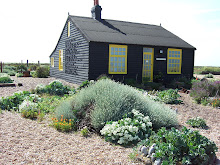
Jo from Higglety Pigglety reminded me that today was the day when bloggers from all over the world posted pictures of a door. Well the door above is my dream door, this is my fantasy hideaway, right by the sea. This door belongs to Prospect Cottage, which sits along a stretch of shingle beach in Dungeness, Kent. It is famous as being the garden of Derek Jarman, a painter, theatre designer and film-maker.

One of my ambitions in life is to have a seaside garden, I hope this becomes a reality?

'Charmed by the landscape, we decided to visit the old lighthouse. There's a beautiful fisherman's cottage there, and if ever it was for sale, I think I'd buy it. As we neared the cottage, black varnished with bright yellow window frames, we saw the green and white 'for sale' sign, the improbability of it made the purchase inescapable' - Derek Jarman.


This has to be one of my favourite books. Derek Jarman's Garden is the last book he ever wrote. It is his own record of how the garden evolved and life in Dungeness. Against all odds, Jarman made a breathtakingly beautiful garden in the most inhospitable of places.

I really love the photography in this book taken by Howard Sooley, he captures every season of the year from all angles.

Jo has asked if I have visited. Yes I have seen Prospect Cottage, J drove me down a year or so back and we drove past in the car. Properties down there are few and far between and I must say some look in disrepair. Some may say the area is pretty bleak, maybe so, but I definitely feel I have some connection to the place.

10/03/2008


my photos

SCILLA

Along with Spring comes blue, and I would say the colour blue in flowers is probably my favourite. Along with green, blue is the most agreeable of colours in the garden. It is always fascinating to watch these little scilla poking their heads through the soil all at different intervals, first the strappy leaves, and then the tiny blue heads appear, in my eyes a truly remarkable little bulb, which every years seems so full of energy. Of course these can be planted straight into the soil, but I keep mine in little pots, storing them away in the shed, with their pot, after flowering, and then introducing them back outside in time to flower again late winter, early spring.


Scillas were regarded by William Robinson as indispensable garden flowers. They bloomed in winter and on into the spring.

09/03/2008


my photo

CELANDINE - Future joy

To the Small Celandine
William Wordsworth

Pansies, lilies, kingcups, daisies
Let them live upon their praises
Long as there’s sun that sets
Primroses will have their glory
Long as there are violets
They will have a place in story
There’s a flower that shall be mine
‘Tis the little Celandine

'Ere a leaf is on a bush
In the time before the thrush
Has a thought about her nest
Thou wilt come with half a call
Spreading out thy glossy breast
Like a careless Prodigal
Telling tales about the sun
When we’ve little warmth, or none

I am sure in a book, I have seen this beautiful little plant classed as a weed?

07/03/2008


my photos

WINTER-FLOWERING CLEMATIS

For interest in the garden during the winter season, I would definitely recommend planting winter-flowering Clematis. They are ideal for climbing up and over any structure, and do seem very reliable. These photos were taken about a week or so ago of two of the four varieties I have, cirrhosa Jingle Bells, Wada's Primrose, cirrhosa Balearica (I chose this one as it reminds me of my grandpa, who lives in Mallorca) and Early Sensation.


I wouldn’t say a record fast grower, but after a few years you may find it starts to thicken up, but don’t worry, we gave ours a quite severe haircut in the summer and afterwards it was looking pretty sorry for itself, but now, well it has grown back beautifully and has flowers in abundance.

02/03/2008


LONG-TAILED TIT

Today on Mothers Day, whilst visiting my very much missed mum's plot at the crematorium, I was lucky enough to see long-tailed tits, not unusual for some of you, but for me as far as I can remember, this is only the second time I have ever seen them, as much as I would love them to, they don't frequent my garden.

I was so excited about this experience that I needed to know more about these endearing little birds, so when back home I had a quick look on a couple of websites. Before I knew nothing, I now know that the long-tailed tit is the only insect eating bird to overwinter here, other species would sooner migrate thousands of miles down to places like South Africa. During the winter they hang around in social groups and around February time will separate into pairs, competing for their favourite mate. The pair will then build an elaborate nest made out of lichen, stuck together with spiders webs, and line the nest with down from their own chests, how sweet is that! Next the eggs are laid, and any pairs from the social group who fail to breed themselves, come along and will help find food for the young and even feed the exhausted mum herself, acting as aunties and uncles. By staying in this group is essential for their survival, a lesson we could learn from?

Well after reading this, how can you fail to love them. Long-tailed tits have shot up to the top of my list of favourite birds!

01/03/2008


my photo

SNOWDROPS - Hope

Do you step out into your garden, full of good intentions of getting lots done, but instead spend more time taking photos than you do getting your hands dirty? Well since starting my garden blog, this is definitely the case for me. It suddenly came to me, as today is the 1st of March, that my Jan/Feb poll would have closed. I asked everyone, which was their favourite spring bulb, well the little beauties above are the winner.

Yes, the snowdrop received 51% of the votes, daffodil came in second with 25%, third bluebell with 16%, and last and definitely not least, the crocus with 6%.

There are approximately 100 different species and cultivars of snowdrop, the two most common being galanthus nivalis which flowers from January to March, and galanthus nivalis floro pleno, a double variety which easily naturalises.

I only have two clumps of snowdrop in my garden, I lost one clump last year. This year I am going to divide the clumps into small sections, and replant. My longterm plan is to have drifts, may have to wait though! This is best done immediately after the plant has flowered and while 'in the green'. Snowdrop bulbs are fiddly and unreliable, so division is the way forward. To increase my stocks I may be lucky enough to get a few clumps off my Dad, he has lots coming up through the lawn, they look beautiful.

Do you know that snowdrop enthusiasts are known as galanthropiles!

28/02/2008


my photos

HELLEBORE - Scandal

What is it about hellebores that all of us seem to love? If you are not sure, just look at the picture above to see. These beautiful plants will bring colour into a very dull winter picture. My step-mum bought me the above plant for my birthday in 2006, helleborus 'Red Lady'. I remember a nice healthy looking plant but with only a couple of insignificant buds, so I planted it and pretty soon it disappeared from above, only to be forgotten. Have any of you planted a plant half expecting to never see it again? At the time this is what I thought, so imagine my surprise when I came back from being away to find this little beauty, looking not only healthy, but flowering so well too.


The hellebore above is the first I ever bought. I chose this particular plant because the flower was a beautiful yellow colour, which over the years, seems to have faded to more cream.


Above is a Corsican hellebore. This variety has become quite large in my garden, so remember to plant in a large space. The flowers last for months, infact I end up cutting the plant back when it starts to look bedraggled, as it tends to swamp other plants growing alongside it which appear later in the year.

24/02/2008


my photo

DIVIDING PLANTS

Sweet sentiment from one of my favourite children's illustrator, Mabel Lucie Attwell. Hope you likes!

Today I have been dividing perennials and have made new plants from eryngium, achillea and coreopsis, and dug up three clumps of tradescanthia, moved one of them and giving the other two away. You can really save money by doing this, as these plants can cost a fortune to buy at this size from the garden centre, and at the same time you are able to swap your plants with others.

I seem to be forever turfing out plants and moving them, every year, never being quite satisfied where I have put them.

my photo

TETE-A-TETE - Regard, Unrequited love, Respect

How I like to get head to head with these little beauties, they are a ray of sunshine, especially after a long winter. A lovely dwarf daffodil, so ideal for all those narrow bare strips of soil around the place. Everyone loves big old blousy daffodils, including me, but I just haven't got the sort of garden where I can fit any in, or where I am not going to keep digging up the bulbs by mistake. I hate to be one to miss out, so these are perfect.

Notice that piece of old terracotta in the picture, well my soil is full of it, and shards of glass. For decades, dating back to the early 1900s, the area was the home of a thriving greenhouse and nursery trade, mainly chrysanthemums but also vineries, being demolished to make way for the building of homes in the late sixties, that very site being where I live.

21/02/2008


my photo

LEEKS

If you want fresh vegetables in the winter, leeks (Musselburgh) are so easy to grow and for a novice vegetable gardener like me, this is good news. My method of growing is to start seed off in a litre pot and when the seedlings are competing against each other (about 8 inches long), that is when I transplant them to the bed. I use the method my Dad uses, which is to simply make a hole in the soil, place the seedling in, and then just fill the hole up with water. Works every time, and this is the result, picked quite young, but of course you can leave until they become fatter, in fact I always leave a few in the ground to go to seed, as the heads are so ornamental and can give any variety of allium a run for their money.

Click on British Leeks for everything you need to know about leeks, including recipes. I love leek and potato soup, but quite often I just saute some in a little butter, add to mashed potato and top with cheese, delicious.

19/02/2008


my photos

CROCUS - Youthful gladness, Cheerfulness

Thanks so much to everyone who has so far voted in my January/February poll, but don't stop now, we have a few days to go yet! I know it is a tough decision to vote for a favourite spring bulb, as in my eyes, every single one of them deserves poll position, but so far crocus hasn't received a single vote. I hope the photos that I took yesterday of crocus in my garden, will sway someone into casting a vote, crocus really are beautiful.

As some of you may be aware I have spent a whole month away and left my garden, well in its winter state. I couldn't believe on my return how much it has changed, you don't tend to notice this so much when you are living with it day to day. The crocus have not only sprung through but are in flower, as are the snowdrops and leucojum, and the narcissi and jonquils which I have in pots, are well on their way too!

16/02/2008


my photo

EUCALYPTUS

I must confess that I wasn't really prised to my garden bench for a whole month, I was on an unforgettable trip to Australia. The photo above was taken from a distance and you can just make out the little fellow sitting up high in the tree. We were very fortunate to have seen this lovely koala and more of his friends and family, in their wild habitat on Kangaroo Island, which lies south of Adelaide. A lifetime ambition has now been fulfilled.

Eucalyptus, or gum trees, are the most characteristic feature of the Australian flora. It grows to 115 metres (375 feet) and has a smooth blue-grey trunk, and long, narrow leathery leaves with a bluish-green hue and many oil glands. Flowering during late summer, it also produces fruit shaped like spinning tops and coated with powdery wax.

Yorkshireman and Australian emigrant, Joseph Bosito, first discovered the volatile oils in Eucalyptus in 1848, and began distilling them. Commercial production started in Victoria in 1860 and, since then, out of the 300 species discovered, 30 have found medicinal use.

The tree's amazing ability to dry out marshy soil also led to its use in eradicating the malaria mosquito in Africa, southern Europe, and India.

16/01/2008


my photo

TAKING A BREAK

I am taking a short break from the blog, but in the meantime I shall leave you with this photo. This bench is placed in a shady part of the garden; I do like sitting in this spot with a nice cup of tea, for a deserved rest, after working up a hard slog in the garden.

Please remember to look in again, as I shall be back, once I can prise myself off this bench!

I have many places where I can sit with a nice cuppa around the garden, in both sunny and shady spots, which include steps and tree stumps. Have you got an unusual place where you like to sit in your garden?

14/01/2008


my photo

PARSNIPS

Well I think it's good news and bad news. How pleased I was when I dug up my first parsnip of the season, the lovely specimen in the centre of the photo. Anxious to dig up another beauty, I quickly located the next one, oh not so good, so I thought let's try another one, oh no another disaster. You see, us gardeners do have some failures you know. I am my no means an expert on vegetable gardening, so I shall have to look this one up, unless any of you out there in blogland could tell me where I have gone wrong?


I did laugh, as I thought how my disasters of a parsnip seemed to resemble something I'd seen on Dr Who. When I came back indoors I looked up the official website, and yes there it was, the very thing right in front of me. I wonder whether the makers modelled The Ood on a mutant parsnip!

Veg Plotting has sent me some good advice, and saying I can still eat them, so right Michelle, this afternoon I made parsnip chips out of them, sprinkled with a small amount of ground rock salt. Tell your nephew that eating them like this is yummy!

12/01/2008


my photo

INSECT HOUSE

This is a photo which I took on our visit to Durrell formerly Jersey Zoo back in September 2007, I believe it to be an insect house?

An insect house is a great addition to any garden, maybe on a smaller scale than the one above, as they provide shelter for many insects which include non-aggressive mason and leafcutter bees who are known to help with pollination around the garden and are also thought to help increase fruit yield? Also an ideal place for ladybirds and lacewings to overwinter too.

I haven't got one yet, but hope to get one up this year.


AWARD NUMBER ONE

Daffy, this ones for you ... having recently discovered your love of elephants, this award could only be for you!

07/01/2008


AURICULA THEATRE

As you have read in my previous post, I do like auriculas in old pots! I only have several plants of the same two varieties, but these are better than having none. The auricula plant is as tough as old boots, mine stay outside in their pots, come rain, shine, frost and snow, and they still come back to life, showing themselves in their full glory in the Spring.

Another one of my plans for the future is to have an auricula theatre, and to build up a collection of some of the more unusual varieties. There is a plethora of beautiful specimens out there to be had.


my photo

The picture above is of an auricula theatre we saw when we visited the National Botanic Garden of Wales, although we visited in the summer, so the theatre was showcasing a marvellous display of geraniums! If any of you are lucky enough to be in the Carmarthenshire area of Wales, this is definitely a place to visit.

The gardens stretch over 500 acres of beautiful countryside, in the site of the old Middleton Estate, a Regency parkland whose gardens, lakes, woodlands, undulating hills and wildflower meadows provide a variety of habitats and microclimates for plant and animal life to thrive.

05/01/2008


my photo

FLOWERPOTS

I spent most of the weekend out in the garden. Whilst going round having a general winter tidy, I was noticing how many flowerpots have cracked and broken, most unusual as I don't usually lose any? Quite a few of my lovely old antique pots have succumbed this year, and these are practically irreplacable, as quite scarce and usually expensive.

I have been lucky in the past, acquiring some from carboots and a bargain job lot for a fiver at Ardingly antiques fair, but these are only small ones, and the ones I have lost are larger, and these are the pots I use for my auriculas, and auriculas do look so much nicer planted in antique pots, don't you think?

Judith from Everything In The Garden's Rosy, I am in agreement with you, I was thinking the very same.

Michele from Cowboys & Custard made a good point about using the breakages for crocks. Yes, at least this is another use for them!

01/01/2008


my photo

WINTER JASMINE - Modesty, Grace, Elegance

What a relief, Winter Jasmine has won my December poll receiving seven votes, equating to 50%! I am only relieved because I have this in my garden and I don't have Daphne which came a very close second, sorry Daphne, maybe one for the future?

Introduced from China in 1844, Winter Jasmine bears sunshine yellow flowers on bare stems.

Nearby neighbours have got the most marvellous display of this at the front of their home, theirs facing west, my dad (his facing south) and stepdad (his facing north) also have lovely specimens, so you can see will tolerate any aspect you may have. A few years back my dad gave me some good size rooted cuttings of his, two of which have taken around my garden, one of which needs a really good prune for next year, some of you may already know that me and pruning just don't go together!

I always go into raptures when people talk of Winter Jasmine, I just think it is so lovely, I suppose because it always adds such welcome colour to a garden, which at this time of year is sometimes shrouded in such dreary cloud, like today for instance.

In second place came Daphne with six votes, Clematis Cirrhosa with one vote, and Sarcacocca with no votes (is this because not many of us really know what this winter beauty is?). Judith from Everything in the Garden's Rosy reminded me of the beauty of Witch Hazel (Hamamelis), certainly another welcome addition to any garden at this time of year.

Michelle from Veg Plotting has also reminded me of Viburnum Bodnatense Dawn, which I do know of and love, and Winter Honeysuckle, which I have definitely got on my shopping list for Winter 2008!