OOO
t

26/02/2009


my photos

HELLEBORE

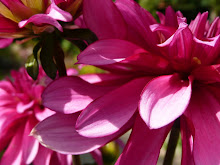
The hellebore, flowering above, is doing very well. It is planted in a north facing position, in semi-shade. When planting I incorporated lots of homegrown compost, but once established the hellebore will tolerate most soils.

The dark purple 'lenten rose' is a welcome addition, the only herbacious perennial, alongside spring bulbs, flowering at this time of year in my garden. Plant preferably on a bank at more or less eye level, as hellebore flowers do have a tendency to bow their heads.

Three or five cut hellebore stems do look beautiful in a vase, if you can bring yourself to take them from the garden.


The beautiful illustration above is taken from Culpeper's Complete Herbal with The British Florist 1812.

24/02/2009


my photos

FOXGLOVE

After flowering last year, I allowed the foxgloves around the garden to set seed. The result is good, and many new plants have sprung up, in the right place and equally some in the wrong place.

After a spring tidy today, I have found many a new home. I haven't the heart to move the one in the photo above, it has decided to grow from a crevice in the wall and looks to have settled in rather nicely.


The photo above, taken in my garden last year, shows the beautiful speckled-pink spires of a foxglove, nestled amongst a pale pink peony.


21/02/2009


my photo

PRIMROSE

The Primrose gets its name from 'prima rosa' meaning first rose.

At the beginning of a new gardening year, the pretty 'primrose yellow' flowers are one of the first to come into bloom.

Last year, immediately after flowering, I divided clumps which had become congested to multiply along banks around the garden. Now my 'plants for free' are coming through, with great success.


19/02/2009


my photo

FOOD FOR BIRDS

Throughout the winter months there will be many resident blackbirds around the garden. Leave a few apples on the ground, they will soon be found, and enjoyed.

At this time of year with the breeding season ahead, each male blackbird will become highly territorial, and will be seen, and heard, vying for the attention of the female. The winner usually being the dominant one.

The apples, and the copious amounts of rain we have been having lately, will too attract slugs. Notice the tiny black one on the terracotta, a real menace to the gardener!


14/02/2009


my photo

STUMP

This old tree stump sits in a wild area of my garden.

Can you see what I can see?


07/02/2009


my photos

BLOOMS OF TENERIFE

Above, a beautiful Hibiscus flower.


The African Tulip Tree with its flame-red flowers.


05/02/2009


my photo

THE CALENDAR - PART THREE

I knew when Winter swirled
Not by the whitened world
Or silver skeins in the lanes
Or frost
That embossed
Its patterns on window-panes
But because there were transfer-sheets
By the bottles of spice and sweets
In the shops in two little streets.

by Barbara Euphan Todd

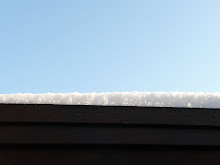
These days, for heavy snow to fall in the South, is a rare occurrence. This was the wintery scene waiting to greet us on Monday morning (02/02/09) after the night before. The snow has now thawed and it's raining.

I wonder whether we will have more snow?

o

29/01/2009


my photo

MONARCH BUTTERFLY

I took this photo of a Monarch whilst on a recent visit to Tenerife in the Canary Islands. This majestic butterfly, the largest on the island, gracefully soars and glides through the air, before settling down for a short while on colourful blossom.

After wasting vital seconds fumbling around in my rucksack for the camera, I haphazardly managed a few clicks before it took off again, way out of reach of the zoom!

Unlike the species found in the US and Canada, the Monarch found in this area are non-migratory so unfortunately will not be seen resting on flowers or blossoming shrubs in the UK. To see this butterfly has been a rare privilege for me.

See more photos from Tenerife on my home blog.


11/01/2009


my photos

DEAD WOOD

Wood piles around the garden are a perfect home for hibernating frogs, toads and newts, as well as insects like woodlice. I do wonder which insect may take up residence in the hollow stems of grass.


Areas of the garden are given up to ivy! Our garden is like a bowl, with banking all around. Although it could be said the ivy has somewhat taken over in parts, it does hold the bank together, and it encourages lots of wildlife too.


I leave an old branch or two amidst the foliage, they make a really good perch for robins, wrens and blackbirds.


This is a tree stump, and where it is slowly rotting down, great crevices have appeared, a perfect place for the stag beetle to lay its eggs, and where their larvae will spend up to seven years inside. Adult stag beetles are short-lived and more often die after mating.

The stag beetle is Britain's largest native ground-dwelling beetle and generally seen in Southern England. I have been lucky enough to spot them in my garden, and last year I saw a large one in flight.

These insects are in decline, click here to see how you can encourage them into your garden.


30/11/2008


my photo

CYCLAMEN

A plant ideally suited to cooler temperatures and weaker sunlight, the cyclamen looks beautiful amongst fallen leaves.

05/11/2008


my photo

EDIBLE FUNGI?

Friend or foe, does anyone know? I spotted a large clump of these whilst cycling through beautiful woodland in Surrey.

It reminded me of when I was a child. My dad would every so often come across field mushrooms whilst out and about on his tractor, he'd pick them and bring them home for my mum to fry up. They would enjoy mushrooms on toast, but not me, I wouldn't touch them. These days I really quite like eating them, the edible variety that is!

29/10/2008


my photo

PEACOCK BUTTERFLY

A peacock butterfly basking in late Autumn sunshine. This butterfly usually goes into hibernation in September and spends the winter in a location where they can find shelter and darkness.

You really do need to click on the photo to enlarge, to discover how perfectly beautiful this butterfly really is.

A butterfly lights beside us, like a sunbeam, and for a brief moment its glory and beauty belong to our world, but then it flies on again, and although we wish it could have stayed, we are so thankful to have seen it at all - author unknown.

25/10/2008


my photo

FEEDING THE BIRDS

Over this weekend the RSPB are holding events all over the country to celebrate the wonderful birds around us, and all nature as a whole - Feed The Birds Day. Unfortunately I won't have the time to attend an event, but tomorrow I shall make sure to fill up the bird feeders around my garden and to replenish them regularly over the cold and wet winter months ahead.

Not all birds will feed from a feeder, so don't forget to leave some food on the ground too. Blackbirds love to come down for sultanas etc and robins love to feed on cake crumbs or if they are very lucky, enjoy a mealworm or two! Just watch out for the starlings, they have a habit of appearing from nowhere and eating everything in sight, and then leaving their deposits everywhere!

I would love to hear what you feed your birds, and which birds visit you in your garden or on your allotment?

A month or so back, Michelle at Veg Plotting opened up her virtual garden for charity to raise money for Water Aid. I left a donation and was lucky enough to be picked out at random to win the lovely birdbook, which I have photographed above. Thanks Michelle. There is still time to visit, the garden's opening times have been extended, quite unusual considering the clocks are going back this weekend! The fundraising target of £1,000 has been reached, but has been reset to £1,300, which could pay for a hand-dug well and handpump to serve 150-200 people in Ghana. If you haven't already done so, you may like to spend some time in VP's Open Garden.

21/09/2008


my photo

GEUM

Princess Juliana, a dark-green, furry leaved, clump forming perennial. The flower, in its second flush, sits on a wiry stem, is hot orange, which adds much needed colour to the front of the border in late summer.

A little gem!

02/09/2008


my photo

ANTIRRHINUM AND BUMBLEBEE

The plants are pollinated by bumblebees, and the flowers close over the insects when they enter and deposit pollen on their bodies. The bee in my photo had a very orange hairy back, anyone good at bee identification?

I was encouraged by the lady tending the plants in B&Q to buy this large pot of white Antirrhinum for half price! I am so glad I did, after initially deadheading, there have been lots more flowers and more to come, and hopefully be able to treat as a perennial and use next year? Remember calling these plants bunny rabbits, when you were small?

01/09/2008


my photo

THE CALENDAR - PART TWO

I knew when Autumn came
Not by the crimson flame
Of leaves that lapped the eaves
Or mist
In amethyst
And opal-tinted weaves
But because there were alley-taws
Punctual as hips and haws
On the counter of Mrs Shaw's.

by Barbara Euphan Todd


Stone or clay formed the earliest marbles, but the alabaster 'alley-taws' made better shooters than the cheaper clay - these words are taken from the National Toy Hall of Fame website.

31/08/2008


my photo

CHRISTIAN MOULLEC AND CRANES

The birdman of Brittany, Christian Moullec makes a welcome return this weekend to the airshow at Shoreham, accompanied on this occasion by giant cranes. Flying alongside him throughout the display these amazing birds would frequently change formation.

Please click on photo for more detail and see more photos of the airshow on my home blog.

28/08/2008


my photo

TEN YEARS OF GARDENING

For me as head gardener, my garden is ten years old, having moved here on this very day back in 1998. The garden started its life back in 1967, and the fuchsia above is one of many plants we inherited from the previous owner. I must confess to not being a lover of the fuchsia, although I am quite happy for this one to stay. The amazing colour shock has occurred naturally, so who makes the rules here, who thinks red and hot pink shouldn't go side by side?


This award couldn't have come at a better time, it has been given to me by a recently acquainted blog friend Clare at Summerfete. I am really pleased Clare left a comment on my blog a few weeks back, as I feel as gardeners and homemakers we have very much in common.

The rules are to list six things which make you happy, well gardening makes me happy, so my answers will be on this theme.

1. Gardener's World makes me happy and I feel very miffed if I miss an episode, I know Clare loves the programme too. I too have reservations about Toby Buckland taking over as main presenter, but hopefully I shall warm to his style. I have really enjoyed Carol Klein's temporary position as head gardener, but I so miss Monty Don, I really do aspire to his style of gardening. Two of my favourite gardening books are The Complete Gardener and The Jewel Garden, both containing most of my favourite plants and brilliant photography.

2. Birds in the garden make me happy. My favourites being robins, wrens, great tits, the list is endless!

3. The scent of Nicotiana Sylvestris makes me happy.

4. The frogs in the garden make me happy. The other day whilst digging out a holly bush about half a dozen hopped out, all going in different directions! I think the spade must have just missed them?

5. To see a hummingbird hawk moth makes me happy. I haven't seen one in my garden this year, have you?

6. What will make me really happy is when I can finally take a step back and feel in total control of my garden. It is of fair size with many mature trees and shrubs, ivy clad slopes, walled borders, a large rockery and an area on ground level for planting. I can see improvement as every year passes, can I ever say I am completely satisfied with how it looks? I think you can all guess the answer to that one!

Now the Tree of Happiness has to be passed to six inspirational bloggers. I choose:

Farming Friends
Flighty's Plot
Greenridge Chronicles
Nikkipolani
Reflections in the Afternoon
The Flour Loft

If you have the time I would love to know what makes you happy either on the farm, on the allotment or in the garden?

27/08/2008


my photo

ACHILLEA PTARMICA (THE PEARL)

A favourite of Edwardian garden designer Gertrude Jekyll. Especially lovely in evening light.

A main stem, with branching stems carrying white button-like flowers and small dark green toothed leaves. Tolerant of most soils and aspects, in my garden doing especially well in moist, sandy soil. This vigorous plant spreads by underground suckers and will quite happily romp through a large area, so be warned. After a long flowering season from June to October, the plant can be cut back to ground level.

A perennial with medicinal properties, good for cutting and using either fresh or dried, and is a great alternative to Gypsophila (baby's breath).

24/08/2008


my photo

ALLIUM SEEDHEAD

At this stage I am careful to pull the whole stem of Allium Cristophii with seedhead, away from the bulb. These can be fixed elsewhere in the border for display after flowering.

22/08/2008


my photo

BORAGE AND BEES

On the very few sunny days we have had this month I have noticed a lot of bee activity on the Borage which has self-seeded in a large clump in an area of my garden. To capture a bee on photo has been difficult as they tend not to hang around on any one flower for any length of time.

The herb Borage originates from central Europe and the Mediterranean. The flowers and leaves are edible with a cucumber taste. The plant is said to 'lift the spirits'.

Introduce Borage to your garden and it has a tendency to take over, so be prepared to be ruthless with much of it ending up as compost, even when it is looking at its best. When pulling up I use gloves, as I find the prickly white hairs on the stems can irritate the skin. Before composting, break down the structure of the woody stems by crushing, as I find this helps to speed up the decomposition process.

Do leave some though, as great nectar for bees, as the honey below shows.


The bright blue flowers of Borage produce a delicately flavoured honey. The bees are taken to the field and when they have finished collecting the nectar, the seeds are harvested to produce Starflower Oil. Click on Borage for all the benefits and facts about the plant.


A recipe - salad of Borage and garden flowers

a handful bull’s blood leaves
20 borage flowers
10-15 purple or pink violet flowers
1 rose, petals only
15 nasturtiums
a handful rocket (with flowers if possible)
4 dill fronds
10 purple basil leaves
1 unwaxed lemon, grated zest, juice of ½
30g parmesan, finely grated
40ml extra virgin olive oil

Wash the leaves and flowers and gently pat dry.
Place in a bowl with the lemon zest and Parmesan and season with sea salt and black pepper. Squeeze over the lemon juice and drizzle with the olive oil.
Toss the salad lightly with your fingers, check the seasoning and serve immediately.


This recipe and photo is taken from the Waitrose website.


19/08/2008


AN AWARD FROM ME TO YOU

A few weeks ago I received this award from Christy, my blog friend who lives in the Phillipines and who blogs at Sweet Tidings.

The Blogging Friends Forever Rules are:

1. Only five people allowed.
2. Four have to be dedicated followers of your blog.
3. One has to be someone new, or recently new to your blog, or live in another part of the world.
4. You must link back to whoever gave you the 'Blogging Friends Forever' award.

This is a first for me, to be passing on an award on my garden blog. I do find it very difficult having to choose just a handful of names. I enjoy, and learn so much from reading every blog from every name I have listed in my sidebar.

Anyway, these are who I have chosen:

Suzanne at Create Fun & Mess
Gillian at Reflections in the Afternoon
Sal at Sal's Snippets
Lavinia at The Birdbath Chronicles
The Dutchess

All these ladies cross over to my home blog too.

18/08/2008


my photos

PLANT COMBINATIONS TWO

Another plant combination which I have been enjoying in my garden over the past couple of years is with Statice and Sedum. This photo was taken about a week or so ago, the Sedum is now just starting to turn a blushed shade of pink.


I have plans to grow more Statice from seed next year. It really does look great in both borders and on sloping banks.

13/08/2008


my photos

SEEING RED

The month of August has seen a lot of rain, perfect for tumbling cherry tomatoes. The variety I have been growing for the past few years is Garden Pearl (gartenperle).


Potentilla (Gibsons Scarlet), a very pretty, clump forming perennial with sprawling stems. Likes a well-drained position, being quite happy to grow through cracks in paving. Keep deadheading for continuous flowering, and when the plant has exhausted itself, leave any remaining flowers to self-seed.


Dahlia (Bishop of Llandaff) with bronze foliage lives in a large pot, and is placed in a frost-free, sheltered position to overwinter. Preferring to keep mine in pots, dahlias are great for placing in gaps which are likely to appear in late summer, and leaves room for experimenting with different colours too.


I made the mistake a few years back of treating Antirrhinum (snapdragon) as an annual, tearing out the plants once they had finished flowering. One got away, and returns ever year to show off this blousy, burgundy red flower.

12/08/2008


my photos

TERRACOTTA POTS

In my garden, this time of year brings with it gaps. To fill in some of these, I place Echeveria in old terracotta pots amongst the plants. Not fully hardy in our UK climate, these must be brought back inside before the first frosts.


Last Winter I lost many old pots to frost, and having accumulated two large buckets full of crocks old and new, I need no more. This being the case I decided to place the breakages between plants and I am quite liking the effect. This may not be suitable if you have cats, dogs or rabbits around, or children come to that!


This was a favourite blue glazed pot of mine which I broke when having one of my clumsy moments. Not wanting to smash to smithereens, I placed it in a shady corner amongst some ferns, and look how the ivy has discovered it. I rather like the effect the ivy is having on the pot!

11/08/2008


my photo

SUMMER SQUASH (PATTYPAN)

Unfortunately, I have no spare time to keep an allotment. I dream of having one, but dream on, the space you already have is at times too much to cope with, I can hear myself saying.

This year I have steered towards growing more flowers, with the idea of a small cutting garden in mind. Out are the vegetables and in has come precious extra space. I have kept some ground for soft fruits and will always leave room for my favourite, runner beans, and will continue to grow container size vegetables in pots, just like I do tumbling tomatoes.

One space which isn't earmarked for anything else, is the bin which holds the rotted down compost. This area is perfect for growing summer squash, a vegetable I got to know a few years back and a vegetable I would now rather grow in preference to courgettes. So easy to propagate from seed, and once established and kept well watered, it will reward you with a bumper crop.


10/08/2008


my photos

BACK TO BLACK

If left unchecked, the garden will quite happily revert back to nature. One problem is bramble, and every so often it has to be cut back. I wait for some fruit before it has to go.


Not many blackcurrants this year? It may be down to moving the plant last year, or not pruning?


Ajuga reptans. Use this plant for ground cover in a semi-shaded area.


Scabious (Chilli Black). Flowers on with regular deadheading. Plants easily take from cuttings.


Ophiopogon (Black Grass). A great plant to use in a black planting scheme.

08/08/2008


my photos

BUDDLEIA

The Butterfly Bush, a very much maligned and misunderstood deciduous shrub. Why, because it effortlessly self seeds on development land and derelict sites, through cracks and bricks in buildings, and along our railway lines and sidings.

A thug to some perhaps, but contrary to belief the form of Buddleia I have in my garden is no problem at all, and its dark pink flowers on arching stems are a welcome edition to any garden in late summer.

Every year, an established bush will need a hard cut back to 3 or 4 buds in early Spring.


Named after the Reverend Adam Buddle (1660-1715), the nectar rich flower spikes are loved by butterflies and other insects.

Silhouettes of a Comma and Red Admiral butterfly, or two fairies, you decide?

07/08/2008


my photo

GREENBOTTLE

Some of us will choose a plant for its beautiful form, colour or texture and some of us will choose a plant for its scent. In my garden I love Eryngium, the sea holly, which I would mark 10 out of 10 for form, colour and texture, but would mark 0 out of 10 for its scent. It doesn't smell at all pleasant.

I wasn't surprised to see this greenbottle actually looking quite beautiful, on one of my plants the other day. Found in all kinds of habitats they are attracted, not only to flowers, but dung and carrion. Need I say more!

Enlarge the photo, this greenbottle looks like he is wearing a pair of shades. Cool or what!

06/08/2008


my photo

LARGE WHITE CATERPILLAR

Remember back to my Colours of Sunshine post I remarked how my zingy St Clements nasturtium was perfect for brightening up your day. I wasn't wrong, the caterpillar of the Large White butterfly certainly thinks so. Not just one, an infestation!

This nasturtium, however much I love it, has sprawled well over half the area of my compost heap this year. At times a nuisance to me, I decided to leave it, with the idea in mind that the butterflies would make use of this plant as they had done so last year, and they most certainly have.

Beautiful St Clements doesn't look so pretty now, no leaves without nibbles, or nasturtium flowers still intact left to brighten up even a salad. But let's face it, my garden is not just for me, it's to share with wildlife too.